Key takeaways
- Control studio humidity to protect greenware, plaster molds, and glazes. Compare five dehumidifiers sized from damp boxes to full pottery studios.
- Top Pick: Eva-Dry E-333 Renewable Mini Dehumidifier (Budget)
- Runner-up: TABYIK 35 OZ Small Dehumidifier (DH-CS01)
- Also consider: Pro Breeze Electric Mini Dehumidifier (PB-03-US)
A pottery studio is one of the wettest rooms in any building. Reclaim buckets, slip tubs, wet ware boards, and rows of freshly thrown pots all release moisture into the air around the clock, and plaster molds absorb that moisture until they soften and grow mold. A dehumidifier sized for the space keeps greenware drying at an even pace, protects stored clay and dry glaze materials, and stops the damp, musty smell that settles into basement and garage studios. The five picks below cover every scale, from a cordless desiccant unit that lives inside a damp box to compressor machines that can dry a full teaching studio.
As an Amazon Associate, we earn from qualifying purchases.
Quick Answer
For most home pottery studios, a small Peltier dehumidifier such as the Pro Breeze Electric Mini or the TABYIK 35 OZ handles everyday moisture from reclaim buckets and drying shelves. Studios in basements or humid climates need a compressor model like the Waykar 34 Pint or the hOmeLabs 22 Pint Wi-Fi, while the cordless Eva-Dry E-333 protects enclosed damp boxes and clay storage cabinets.
Why Humidity Control Matters in a Pottery Studio
Clay work goes better in a stable humidity band. When studio air stays very humid for days, leather-hard pieces refuse to firm up, handles and attachments dry at different rates than the pots they are joined to, and ware boards stay damp enough to grow mildew. Plaster suffers most: molds, bats, and wedging surfaces drink moisture from the air, and a saturated plaster mold releases casts poorly and degrades faster. Dry materials suffer too, because glaze chemicals, plaster powder, and dry clay stored in open bins cake and clump as they absorb airborne water.
The sources of moisture are constant. A reclaim bucket with a wet lid gap, a slip container, a sink used for tool washing, and a shelf of covered greenware all evaporate steadily. Basements and garages add ground moisture on top. A dehumidifier does not replace ventilation or a dust collector, but it is the one tool that pulls water out of the room air itself, which is why studios pair it with the air purifiers and exhaust fans used for dust control.
Sizing is the main decision. Small thermoelectric units move ounces of water per day and suit a single room or a corner drying area. Compressor units move pints per day and are the right tool when the whole studio sits in a damp basement. The picks below are grouped by budget, mid-range, and premium tiers so the capacity matches the room rather than the other way around.
The 5 Best Dehumidifiers for Pottery Studios
1. Eva-Dry E-333 Renewable Mini Dehumidifier (Budget)

The E-333 is a cordless desiccant unit filled with silica gel beads that absorb moisture silently and then renew on a plug-in base. It needs no power while it works, produces no water tank to empty, and fits inside the enclosed spaces where studio humidity does the most damage: damp boxes, clay storage cabinets, and cupboards holding plaster molds and dry glaze chemicals. An indicator window in the beads shows when the unit is saturated and ready for renewal.
Specs:
- Technology: silica gel desiccant, fully cordless in use
- Coverage: enclosed spaces up to 333 cubic feet
- Water handling: moisture held in the gel beads, no tank
- Renewal: plug-in base dries the beads for reuse
- Model: E-333
Choose it for targeted protection inside cabinets and damp boxes rather than whole-room drying.
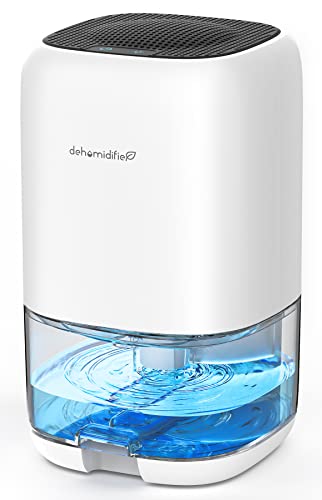
2. TABYIK 35 OZ Small Dehumidifier (Budget)
The TABYIK DH-CS01 is a compact Peltier unit built for a single small room. Its transparent 35-ounce tank lets you see the water level at a glance, and it shuts off automatically when the tank fills. In warm, humid conditions it collects up to 16 ounces of water per day, which is enough to take the edge off a small home studio, a clay corner in a spare room, or the area around a drying shelf. At 28 decibels it runs quietly enough to leave on during long trimming and glazing sessions.
Specs:
- Technology: Peltier thermoelectric
- Extraction: up to 16 ounces per day at 86 degrees Fahrenheit and 80 percent relative humidity
- Tank: 35 ounces (1,000 milliliters) with auto shut-off
- Coverage: rooms up to 280 square feet
- Noise: 28 decibels
- Power: 40 watts
- Size and weight: 5.9 x 5.9 x 10.1 inches, 2.2 pounds
- Model: DH-CS01
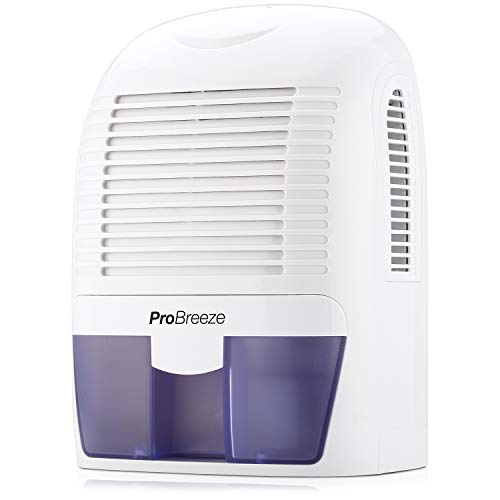
3. Pro Breeze Electric Mini Dehumidifier (Mid-Range)
The Pro Breeze PB-03-US steps up the tank size to 52 ounces and the daily extraction to 18 ounces, so it needs emptying less often than smaller Peltier units. It suits a dedicated home studio room where reclaim buckets, a slip tub, and regular wheel work keep the air damp. The auto shut-off and full-tank indicator protect against overflows, and the compact body tucks onto a shelf or workbench corner without giving up floor space near the wheel.
Specs:
- Technology: Peltier thermoelectric
- Extraction: up to 18 ounces per day
- Tank: 52 ounces with auto shut-off and full indicator light
- Coverage: up to 2,200 cubic feet (215 square feet of floor area)
- Power: 40 watts
- Weight: 3.3 pounds
- Model: PB-03-US
4. Waykar 34 Pint Dehumidifier (Mid-Range)
The Waykar PD09B is a compressor machine, and that changes the scale of the problem it solves. It removes up to 34 pints of moisture per day in hot, humid conditions and covers spaces up to 2,500 square feet, which makes it the pick for basement studios, shared teaching spaces, and garages where damp air rolls in all summer. The included drain hose allows continuous drainage into a floor drain or sink, so the 0.58-gallon tank never stops the machine mid-cycle. A built-in humidistat lets you set a target humidity band and hold it.
Specs:
- Technology: compressor (refrigerant)
- Extraction: up to 34 pints per day at 95 degrees Fahrenheit and 90 percent relative humidity
- Coverage: spaces up to 2,500 square feet
- Tank: 0.58 gallon, plus drain hose for continuous drainage
- Humidity setting range: 30 to 85 percent
- Size and weight: 9.8 x 9.1 x 18.5 inches, 29.8 pounds
- Extras: touch control panel, 24-hour timer
- Model: PD09B
5. hOmeLabs 22 Pint Wi-Fi Dehumidifier (Premium)
The hOmeLabs HME1001 pairs compressor power with smart control. It removes 22 pints of water per day under standard test conditions and up to 56 pints per day in hot, saturated air, and the 0.8-gallon tank runs longer between emptying than the tanks on most mid-size units. Wi-Fi control through an app means the humidistat can be checked and adjusted from outside the studio, which suits potters who fire and work on a schedule and want the room dry before a glazing session. Built-in wheels and handles make it easy to roll between the wheel area and the kiln room.
Specs:
- Technology: compressor (refrigerant)
- Extraction: 22 pints per day, up to 56 pints per day at 95 degrees Fahrenheit and 90 percent relative humidity
- Tank: 0.8 gallon with auto shut-off
- Coverage: rooms up to 3,000 square feet
- Controls: Wi-Fi app control and built-in humidistat
- Size and weight: 15.2 x 10.2 x 19.7 inches, 33 pounds
- Model: HME1001
How to Choose a Dehumidifier for a Pottery Studio
Start with the room, not the machine. A single spare-room studio with one wheel rarely needs more than a Peltier unit running near the drying shelves. A basement studio, a garage with a concrete floor, or any room that smells musty in summer needs a compressor model, because thermoelectric units cannot keep up with ground moisture and large air volumes.
Match the technology to the job. Desiccant units like the Eva-Dry work without power inside enclosed cabinets and damp boxes, where even the smallest electric unit cannot fit. Peltier units are quiet and light but move ounces per day. Compressor units move pints per day, hold a set humidity with a humidistat, and support continuous drainage, which matters when reclaim and slip work add water to the air every single day.
Think about drainage before anything else. A tank that fills overnight and shuts the machine off protects nothing. If the studio has a floor drain, sink, or sump, choose a model with a drain hose and run it continuously. If not, pick the largest tank you can fit and place the unit where emptying it becomes part of the studio routine.
Place the unit where the moisture is made: near reclaim buckets, the sink, and drying shelves, with clearance around the intake so shelves and ware boards do not block airflow. Keep it away from the wedging table and glaze bench if dust is heavy, and wipe or rinse the filter on schedule, because clay dust coats filters faster than household dust does.
Who Should Skip a Dehumidifier
Skip the purchase if the studio already holds a steady moderate humidity with open windows, a vent fan, or building climate control; in that case a hygrometer alone will confirm the room is fine. Skip the small Peltier and desiccant picks if the studio is a large, open basement, because they cannot move enough water to change the room. Skip a dehumidifier as a fix for active leaks, standing water, or a cracked foundation, since those problems need repair first and the machine second. Finally, skip placing any electric dehumidifier where splash water from the sink or a thrown pot can reach the intake; move the unit or solve the splash problem first.
Frequently Asked Questions
What humidity level is best for a pottery studio?
A moderate band in the middle of the range works best for most studios. Air that stays very humid slows greenware drying and encourages mold on ware boards and plaster, while extremely dry air can skin over thrown pieces and crack attachments before they are joined. A compressor dehumidifier with a humidistat holds a set level automatically.
Can a dehumidifier speed up greenware drying too much?
Yes, if it is oversized for the room or aimed directly at the drying shelf. Keep the unit at a distance from covered greenware, keep pieces wrapped as usual, and use the humidity setting rather than continuous mode when the room only needs light control. Even, room-wide drying is the goal, not fast drying.
Where should a dehumidifier sit in a pottery studio?
Place it near the biggest moisture sources, usually the reclaim area, sink, and drying shelves, with open space around the air intake and outlet. Floor placement suits compressor models with drain hoses. Small desiccant units belong inside the enclosed spaces they protect, such as damp boxes and cabinets.
Do dehumidifiers help plaster molds last longer?
They help indirectly. Plaster absorbs airborne moisture between uses, and stored molds kept in dry air stay firmer and resist mold growth on the surface. A small desiccant unit inside the mold cupboard plus reasonable room humidity is a practical combination for mold storage.
Final Verdict
Humidity is a working material in a pottery studio, and it deserves the same deliberate control as clay moisture itself. For cabinets and damp boxes, the Eva-Dry E-333 is the simplest protection available. For a small home studio, the TABYIK 35 OZ and Pro Breeze PB-03-US quietly hold the line. For basement and shared studios, the Waykar PD09B and the hOmeLabs HME1001 bring compressor capacity, humidistats, and continuous drainage that keep greenware, plaster, and dry materials in good condition all season.