
Key takeaways
- Compare the best clay wedging boards for home pottery studios, from compact handled MDF boards to large Medex surfaces and canvas classroom packs.
- Top Pick: Penguin Pottery Portable Clay Wedging Board, 12 x 18
- Runner-up: Penguin Pottery Portable Clay Wedging Board, 12 x 18
- Also consider: CALPALMY Clay Wedging Board, 12 x 18
Wedging is the step that decides whether a lump of clay behaves at the wheel or fights back. Working out air pockets and evening up moisture takes a firm, flat surface with a little grip, and a kitchen counter rarely qualifies: clay sticks to slick laminate, slides across polished stone, and leaves a gritty film behind. A dedicated wedging board solves all three problems at once, giving you a portable, slightly absorbent work surface that moves from table to shelf, keeps clay dust in the studio corner, and protects the furniture underneath.
The five boards below cover the main ways potters actually buy this tool: two compact 12 by 18 inch boards with built-in handles for everyday home use, a larger 18 by 24 inch board for bigger batches and slab work, a canvas-covered ten-pack built for classrooms, and a five-board studio pack for shared spaces. The differences that matter are size, material, thickness, and surface type.
As an Amazon Associate, we earn from qualifying purchases.
Quick Answer
For most home potters, the Penguin Pottery 12 by 18 inch board in Medex MDF is the safest pick, with a built-in handle and rounded edges. The CALPALMY covers the same footprint in thinner, lighter MDF. Step up to the Penguin Pottery 18 by 24 for large batches, choose the AMACO canvas ten-pack for classes, and pick the Penguin Pottery five-pack for a shared studio.
The 5 Best Clay Wedging Boards
1. Penguin Pottery Portable Clay Wedging Board, 12 x 18


Penguin Pottery is the brand most associated with this product type, and its standard board explains why. The panel is cut from Medex MDF, a water-resistant grade of medium-density fiberboard made for damp environments, rather than the plainer fiberboard used in cheaper boards. That matters because wedging presses wet clay against the surface session after session, and a board that shrugs off moisture stays flat instead of swelling at the edges. At 3/8 inch thick, it stays light enough to carry one-handed while still feeling rigid on a table.
A built-in handle is cut into one end, and both the board edges and the handle edges are rounded, so nothing sharp digs into your palms when you carry a clay-covered board to the sink. Penguin Pottery deliberately leaves the surface bare instead of gluing on canvas, arguing that canvas traps dry clay and sheds dust back into fresh work. The brand states the board is made in the USA from renewable wood sources and lists a lifetime warranty. For a pound or two of clay at a time, this is the size most home studios end up using daily.
Specs:
- Size: 12 x 18 inches
- Material: Medex MDF, water-resistant
- Thickness: 3/8 inch
- Handle: one built-in handle, rounded edges
- Surface: bare board, no canvas cover
- Warranty: lifetime warranty listed by the brand
2. CALPALMY Clay Wedging Board, 12 x 18

The CALPALMY board matches the same 12 by 18 inch footprint in a slimmer profile. Made from standard MDF at 9 millimeters thick, it trades a little rigidity for a lighter carry weight, which suits potters who move between a dining table, a garage bench, and a class across town. A cut-out handle is built into one end for that grab-and-go routine.
Like the Penguin Pottery board, the CALPALMY skips a canvas covering on purpose: bare board does not accumulate dry clay dust the way a fabric surface can, and it wipes clean with a damp sponge. Standard MDF is less water-resistant than Medex, so this board rewards a quick dry-off and flat storage between sessions rather than being left under wet clay overnight. If your wedging is mostly fresh bag clay in small batches, this is a sensible budget-tier option with a compact footprint.
Specs:
- Size: 18 x 12 inches
- Material: MDF
- Thickness: 9 mm
- Handle: built-in cut-out handle
- Surface: bare board, no canvas cover
- Model: ClayBoard-MDF-1812-9
3. Penguin Pottery Portable Clay Wedging Board, 18 x 24
Doubling the work surface changes what a board can do. The 18 by 24 inch Penguin Pottery board keeps the same Medex MDF construction and water resistance as the smaller model, in a panel large enough to wedge several pounds of clay at once and still leave room to roll a slab. It is the natural pick for hand builders who move straight from wedging to slab rolling, and for anyone reclaiming clay in bigger batches.
The board weighs 6.84 pounds, so it stays put under hard pushing better than the compact boards, and one rounded handle is cut into the frame for carrying. Thickness is the same 3/8 inch Medex, with the same listed lifetime warranty and US manufacture. The trade-off is storage: at two feet long, it needs a shelf, a slot beside the wheel, or wall space rather than a drawer. Measure your table first, because a board that overhangs the edge will flex under load.
Specs:
- Size: 18 x 24 inches
- Material: Medex MDF, water-resistant
- Thickness: 3/8 inch
- Handle: one rounded built-in handle
- Weight: 6.84 pounds
- Warranty: lifetime warranty listed by the brand
4. AMACO Canvas Covered Boards, 10-Pack
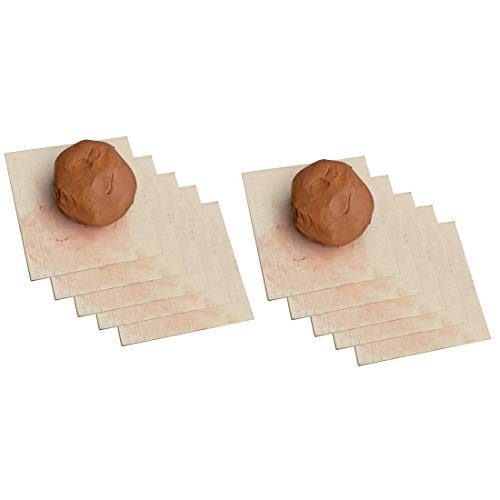
AMACO takes the opposite approach to surface design. Instead of a bare fiberboard panel, each board in this ten-pack is covered in canvas, the traditional wedging surface. Canvas grips clay slightly, releases it cleanly, and gives beginners forgiving feedback while they learn the wedging rhythm. Teachers favor them because a pack puts a personal work surface in front of every student, keeping shared tables cleaner and letting learners carry work without touching the clay.
Each board measures 10 by 10 inches, sized for individual portions of clay rather than studio-scale batches: the right scale for a class, a workshop, or a kids’ pottery party, and the wrong scale for wedging a full bag of stoneware. Canvas does need care: shake and wipe boards over a bin, and let them dry fully before stacking, so trapped clay does not build up. For group settings, nothing else here equips ten workstations in one purchase.
Specs:
- Pack count: 10 boards
- Size: 10 x 10 inches each
- Surface: canvas covered
- Intended use: wedging and rolling at individual workstations
- Best suited to: classrooms, workshops, and group sessions
5. Penguin Pottery School and Studio Pack, Set of 5

The School and Studio Pack bundles five of Penguin Pottery’s 12 by 18 inch Medex boards into one purchase for shared spaces. Each board carries the same specification as the single board above: water-resistant Medex MDF at 3/8 inch thick, a built-in handle with rounded edges, a bare surface with no canvas, and manufacture in the USA. Buying the set standardizes the studio, so every bench has the same surface height and behavior.
A matched set solves a real annoyance in community studios and school art rooms, where a shelf of mismatched boards in different thicknesses slows down stacking, storing, and handing out. Five identical boards also give a home potter a rotation system: one in use, one drying flat, and spares for slab work or a second clay body, which matters because wedging white porcelain on a board seasoned with red stoneware residue invites color contamination. If you run classes from home and prefer bare Medex surfaces, choose this pack over the canvas boards.
Specs:
- Pack count: 5 boards
- Size: 12 x 18 inches each
- Material: Medex MDF, water-resistant
- Thickness: 3/8 inch
- Handle: built-in handle on each board
- Surface: bare board, no canvas cover
How to Choose a Clay Wedging Board
Start with size. A 12 by 18 inch board handles the one to three pound lumps most home potters wedge for throwing, and it stores on edge in a closet or under a bench. Move to 18 by 24 inches if you wedge larger batches, blend two clay bodies, or roll slabs on the same surface. Anything near 10 inches square is a per-student classroom board, not a primary studio surface.
Material decides how the board ages. Medex MDF is the water-resistant grade of fiberboard and tolerates constant damp contact best. Standard MDF and HDF boards work well, but wipe them dry after sessions and store them flat, because edges left wet can swell. Thickness matters mainly for stiffness: panels around 3/8 inch to 1/2 inch feel solid on a firm table, while thinner 9 mm boards flex slightly on soft surfaces.
Surface type is a fork in the road. Bare fiberboard wipes clean and cannot trap dry clay dust. Canvas gives extra grip and release that many potters learned on, at the cost of more careful cleaning. Handles look minor until you carry a clay-smeared board across a room; a cut-out handle keeps one hand clean for doors and taps. Set the board on a firm surface at wrist height when your arms hang relaxed, so body weight does the pushing instead of your shoulders.
Who Should Skip a Portable Wedging Board
Skip the portable board if your studio already has a fixed wedging table with a plaster or canvas top. A heavy, dedicated table at the right height is the better tool, and a portable board adds only a duplicate surface competing for space. Production potters who wedge very large volumes may outgrow even the 18 by 24 inch format quickly.
Think twice as well if your main task is drying out very wet reclaimed clay. Boards absorb little moisture; a plaster slab or bat pulls water far faster and stiffens sloppy reclaim quickly. In that workflow, buy plaster equipment first and treat a board as the everyday surface for fresh clay. And if you only use small amounts of pre-conditioned clay for hand building, a simple canvas mat may cover your needs without another rigid board to store.
Frequently Asked Questions
What size wedging board do most home potters need?
A 12 by 18 inch board is enough for the small batches most home potters wedge for throwing, roughly one to three pounds at a time. Choose an 18 by 24 inch board if you blend clay bodies, wedge large batches, or roll slabs on it.
Is a bare board or a canvas-covered board better for wedging?
Neither is universally better. Bare Medex or MDF wipes clean and cannot trap dry clay, which keeps dust down. Canvas grips and releases clay in a way many potters find forgiving, especially for teaching, but it needs shaking out and full drying between uses.
How do you clean a clay wedging board?
Scrape off soft clay with a bench scraper, wipe the surface with a damp sponge, and let the board dry flat before storing it. Clean wet rather than dry, since sweeping dried clay raises silica dust. Never soak a fiberboard panel, even a water-resistant one.
Can a wedging board replace a plaster slab?
Only partly. A board is the better everyday surface for fresh clay because it is portable and easy to clean. A plaster slab absorbs far more water, so it stays the right tool for stiffening wet reclaimed clay. Many studios keep both.
Final Verdict
For a single board that will live in a home studio for years, the Penguin Pottery 12 by 18 inch Medex board is the pick: water-resistant material, a rounded built-in handle, and a bare surface that wipes clean. The CALPALMY covers the same footprint in a lighter, slimmer panel for potters who carry their setup between rooms or classes. Bigger work points to the Penguin Pottery 18 by 24, while group settings split by surface preference: AMACO’s canvas ten-pack for classroom stations, or the Penguin Pottery five-pack for identical bare Medex boards at every seat. Match the board to your batch size and cleaning habits, and any of the five will serve well.









