
Key takeaways
- Compare anti-fatigue floor mats for pottery studios by cushion thickness, grip on dusty floors, cleaning, and sizes for the wheel and wedging table.
- Top Pick: ComfiLife Anti Fatigue Floor Mat
- Runner-up: Sky Solutions Anti Fatigue Mat
- Also consider: Topo Mini Comfort Mat by Ergodriven
Throwing, trimming, and wedging all happen on your feet. A single session at the wheel can keep you standing in one spot for an hour or more, usually on concrete, tile, or sealed studio flooring that gives your legs and lower back no relief at all. Add the reality of a working studio, where the floor around the wheel collects water, slip, and fine clay dust, and the surface you stand on matters as much as the stool you sit on.
An anti-fatigue floor mat will not fix bad posture, but the right one cushions long standing sessions, keeps your footing steadier on dusty floors, and contains the wet ring of splashes that forms around a wheel. This guide compares five mats that suit pottery studio work, from thick flat foam pads for the wedging table to a contoured standing mat for potters who shift their weight while they throw.
As an Amazon Associate, we earn from qualifying purchases.
Quick Answer
For most pottery studios, a three-quarter-inch flat foam mat is the sweet spot: thick enough to cushion long throwing sessions, low at the edges, and easy to wipe down after a muddy day. The ComfiLife and Sky Solutions mats below fit that description best. Choose the contoured Topo Mini if you shift around while standing, and a two-piece set to cover both the wheel and the wedging table.
What a Pottery Studio Asks of a Floor Mat
A studio floor is harder on a mat than a kitchen floor. Dry clay dust works like fine grit underfoot, wet slip makes smooth surfaces slick, and a mat near the wheel gets splashed every session. Four things matter most. First, cushion thickness: foam around three quarters of an inch softens concrete without feeling unstable when you lean into centering. Second, surface texture: a pebbled or textured top gives shoes and bare feet something to grip when dust settles. Third, beveled edges: a sloped edge sits flatter, resists curling, and is less likely to trip you when you step off the mat carrying a ware board. Fourth, cleaning: a mat in a studio will be covered in clay, so a waterproof, stain-resistant surface that wipes or rinses clean beats fabric every time.
Placement matters too. A 20 by 32 inch mat suits a single standing spot in front of a wheel or wedging table. A longer 20 by 39 inch mat covers the side-step you take when you reach for tools and water. If your wheel work is mostly seated, put the mat at the wedging table and the sink instead, where standing time is longer and less broken up.
The 5 Best Pottery Studio Floor Mats
1. ComfiLife Anti Fatigue Floor Mat
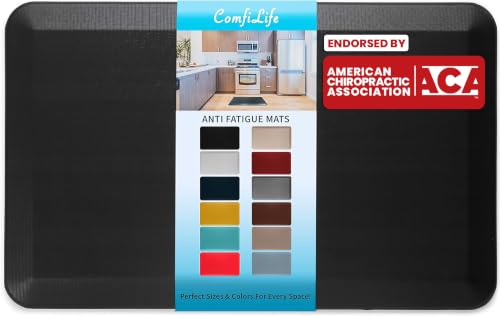
The ComfiLife mat is the straightforward pick for a dedicated standing spot at the wheel. Its high-density memory foam core is three quarters of an inch thick, which is firm enough to stand on while centering larger pieces yet soft enough to take the ache out of a long trimming session. The non-slip bottom holds position on smooth studio floors, and the stain-resistant top surface wipes clean when slip dries on it. The 20 by 32 inch footprint fits neatly in front of most wheels without crowding the pedal area.
Specs:
- Size: 20 x 32 inches
- Thickness: 3/4 inch
- Core: high-density memory foam
- Bottom: non-slip
- Surface: stain resistant, wipes clean
2. Sky Solutions Anti Fatigue Mat

Sky Solutions offers the same three-quarter-inch cushion in a longer 20 by 39 inch format, which suits potters who stand sideways at a wedging table or step along the side of the wheel while pulling walls. The foam core is designed to keep its shape rather than bottoming out, and the surface resists stains from iron-rich clay bodies that leave marks on lighter materials. Smaller sizes exist if your studio floor is tight, but the longer mat is the one that earns its space in a working studio.
Specs:
- Size: 20 x 39 inches (smaller sizes also made)
- Thickness: 3/4 inch
- Core: supportive foam cushion
- Surface: stain resistant
- Bottom: non-slip
3. Topo Mini Comfort Mat by Ergodriven

The Topo Mini is the different one in this list. Instead of a flat pad, it has a contoured, raised terrain molded into the surface, which encourages you to shift your feet and change position while you stand. That suits potters who stand through long glazing or hand-building sessions and tend to lock their knees in one place. It is molded from solid polyurethane with a pebbled skin, so clay dust brushes off and the surface tolerates studio wear well. The Mini is the compact version, sized for smaller standing spots and shorter users.
Specs:
- Material: 100 percent polyurethane
- Surface: contoured calculated terrain, pebbled skin
- Model: 8005
- Item weight: 4 pounds
- Warranty: 7-year manufacturer warranty
4. FEATOL Anti Fatigue Mat

The FEATOL mat is the thickest flat option here at nine tenths of an inch, with a high-density memory foam core under a polyurethane leather top. That extra thickness helps on bare concrete, which is common in garage and basement studios where cold floors make long sessions harder on joints. The top surface is smooth and sealed, so dried clay wipes off without soaking in, and the non-slip bottom keeps the mat planted when you step on and off it with wet shoes.
Specs:
- Thickness: 9/10 inch
- Core: high-density memory foam
- Top: polyurethane leather, wipe clean
- Sizes: 20 x 32 inches and 20 x 39 inches
- Bottom: non-slip
5. GORILLA GRIP 2 Pack Cushioned Anti Fatigue Mats
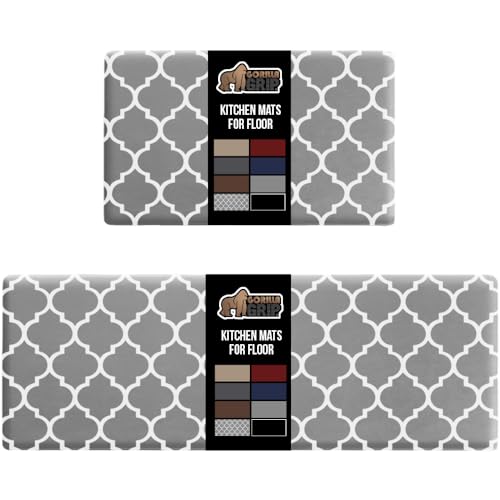
If you stand in two places, this two-piece set covers both: the 17 by 24 inch mat fits a single spot at the wheel, and the 17 by 48 inch runner suits a wedging table or sink run. The foam is about half an inch thick, so the cushion is lighter than the three-quarter-inch mats above, but the pebbled surface is waterproof and stain resistant, and the materials carry OEKO-TEX STANDARD 100 certification. One honest caution: the brand states these mats are not slip resistant, so wipe up water that gets on or under them, which matters in a studio where splash water is constant.
Specs:
- Set: 17 x 24 inches plus 17 x 48 inches
- Thickness: about 1/2 inch (0.47 inch foam)
- Surface: pebbled, waterproof, stain resistant
- Certification: OEKO-TEX STANDARD 100 materials
- Note: brand states the mats are not slip resistant
How to Choose
Start with where you actually stand. Time a normal session and notice which spot keeps you on your feet longest; that is where the mat belongs. For most potters it is the wedging table first and the wheel second, because seated throwing already takes weight off your legs.
Match thickness to your floor. On concrete, choose three quarters of an inch or more, like the ComfiLife, Sky Solutions, or FEATOL mats. On wood or cushioned flooring, half an inch is enough, and a thinner mat is easier to step onto with a ware board in your hands. Check the edges as well: beveled edges that sit flat are safer in a studio where you often look at the piece you are carrying rather than at your feet.
Think about cleaning before size. Clay dust and dried slip are guaranteed, so a sealed, waterproof top that wipes or rinses clean will outlast any fabric-covered pad. If your studio floor gets genuinely wet around the wheel, favor mats with a grippy non-slip bottom, keep the mat out of standing water, and lift it now and then so the floor underneath dries fully and does not grow slippery residue.
Finally, size the mat to the job. A 20 by 32 inch mat is right for one standing position. Go longer, 20 by 39 inches or a runner, if you side-step along a wedging table. Choose the contoured Topo Mini only if you like the idea of moving your feet while you stand; potters who brace hard against the floor while centering usually prefer a flat mat that stays predictable underfoot.
Who Should Skip a Floor Mat
Skip the mat if your wheel work is entirely seated and your other studio tasks are short; you will get more from a good stool than from floor cushioning. Skip contoured mats if you have balance concerns, because the raised terrain is designed to make your feet move. And skip any mat, whatever the cushion, if your studio floor stays flooded during throwing: standing water under a foam mat creates a slip hazard and traps moisture against the floor. In that case, sort out drainage and splash control first, then add a mat once the floor is merely damp rather than wet.
Frequently Asked Questions
Can an anti-fatigue mat handle wet clay and slip?
Yes, if the top surface is sealed and waterproof, as on the mats listed here. Dried slip wipes off with a damp cloth, and most of these mats can be rinsed. What matters is the underside: lift the mat regularly so moisture trapped beneath it dries out instead of making the floor slick.
What thickness is best for standing at a pottery wheel?
Three quarters of an inch is the practical middle ground. It cushions concrete well without feeling spongy when you brace to center clay. Thinner mats around half an inch suit wood floors and shorter tasks, while the thickest option here, at nine tenths of an inch, helps most on cold, hard basement or garage floors.
Where should I put a mat in a small studio?
Put it where you stand still the longest, which for most potters is the wedging table, then the sink, then the wheel if you throw standing. A two-piece set solves the problem neatly by covering two stations at once, so you are not dragging one mat around a wet floor.
Will clay dust damage the mat surface?
Dry clay dust is abrasive underfoot over time, but a pebbled or sealed surface tolerates it well if you shake or sweep the mat off regularly. Avoid dragging bats, buckets, or ware boards across the mat, since grit trapped under a heavy edge is what scratches and wears the top skin fastest.
Final Verdict
For a single standing spot, the ComfiLife mat is the safest all-round choice: proper three-quarter-inch cushion, a non-slip bottom, and a surface that cleans up fast. The Sky Solutions mat is the better buy if you want the same cushion in a longer format for the wedging table. Choose the FEATOL for the thickest pad on bare concrete, the GORILLA GRIP set to cover two stations at once, and the Topo Mini if you prefer a contoured surface that keeps your feet moving through long studio days.









