
Key takeaways
- Compare the best respirators for pottery studios, with P100 half masks from 3M, GVS and Honeywell North chosen for silica dust, seal quality and comfort.
- Top Pick: 3M Half Facepiece Respirator Assembly 6391
- Runner-up: 3M Reusable Respirator Half Facepiece 7502
- Also consider: 3M Rugged Comfort Quick Latch Half Facepiece 6502QL
Dry clay is dusty work. Mixing glaze from raw powder, scraping dried bats, sanding bisque ware and sweeping the studio floor all push fine particles into the air, and both clay bodies and many glaze materials contain crystalline silica. That dust is far too fine for a paper nuisance mask, which is why respiratory protection in a pottery studio should start with a well-fitting half mask and high-efficiency filters rather than a disposable mask pulled from a multipack.
This guide compares five reusable half-face respirators that suit studio pottery work, from a ready-to-wear 3M assembly with P100 filters in the box to a compact low-profile mask that stays comfortable through long trimming sessions. Every pick is a NIOSH-approved facepiece platform from an established safety brand, and the notes below focus on what matters at the wheel and the glaze bench: filter class, seal quality, sizing, and how easy each mask is to live with for hours at a time.
As an Amazon Associate, we earn from qualifying purchases.
Quick Answer
For most potters, the 3M 6391 assembly is the easiest starting point because it pairs a 6000 Series facepiece with P100 filters in one box. The 3M 7502 is the comfort upgrade, the 6502QL adds a drop-down latch, the GVS Elipse is the compact pick, and the Honeywell North 5500 is the budget facepiece.
The 5 Best Respirators for Pottery Studios
1. 3M Half Facepiece Respirator Assembly 6391

The 6391 assembly is the simplest route to proper protection because everything arrives together: a 3M 6300 large facepiece and a pair of 2091 P100 particulate filters. Twist the filters onto the bayonet mounts, adjust the four-point harness, run a seal check, and the mask is ready for glaze mixing or a dusty cleanup session. The thermoplastic facepiece is less supple than silicone, but it is durable, easy to wipe down after a shift, and a sensible budget-tier starting point for a first studio respirator. Replacement 2091 filters are stocked almost everywhere safety gear is sold, and the same facepiece also accepts 2097 P100 filters when nuisance-level odor relief is wanted around glaze chemicals.
Specs
- Size: Large (a Medium assembly is sold as the 6291)
- Facepiece: 3M 6300, thermoplastic elastomer
- Included filters: One pair of 3M 2091 P100 particulate filters
- Connection: Bayonet
- Harness: Four-point head harness
- Rating: NIOSH-approved assembly with P100 filters
2. 3M Reusable Respirator Half Facepiece 7502

The 7502 is the mask many potters graduate to when sessions get longer. Its full silicone face seal is softer and more flexible than the 6000 Series material, so it tends to stay comfortable and sealed through a full day of throwing, trimming and glazing. The Cool Flow exhalation valve directs exhaled air downward, which helps keep safety glasses clearer, and the integrated drop-down suspension lets the facepiece hang from the neck between tasks. This is a premium-tier facepiece sold on its own, so filters are a separate purchase; pairing it with 2097 P100 filters adds relief from nuisance-level organic vapors alongside the particulate protection clay dust calls for.
Specs
- Size: Medium (7501 Small and 7503 Large also available)
- Face seal: Silicone
- Exhalation valve: 3M Cool Flow
- Connection: Bayonet; accepts 3M 2000, 2200 and 7000 Series filters and 6000 Series cartridges
- Suspension: Integrated drop-down design
- Filters: Sold separately
3. 3M Rugged Comfort Quick Latch Half Facepiece 6502QL
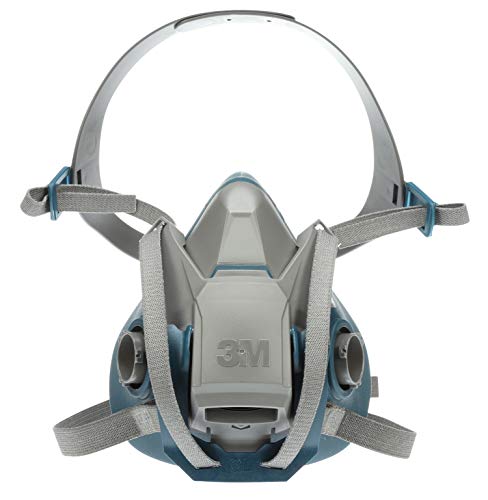
Studio work involves constant small interruptions: answering a question, checking a kiln, taking a drink. The 6502QL is built for exactly that rhythm. A latch at the front drops the facepiece down to hang against the chest with one hand, then clicks it back into place without loosening the head harness, so the seal you adjusted at the start of the session is the seal you keep. The silicone face seal and Cool Flow valve carry over the comfort features of the 7500 Series in a more rugged mid-range housing, and the bayonet mounts accept the same wide range of 3M filters and cartridges, including the P100 pancakes most potters will use.
Specs
- Size: Medium (6501QL Small and 6503QL Large also available)
- Face seal: Silicone
- Feature: Quick Latch drop-down mechanism
- Exhalation valve: 3M Cool Flow
- Connection: Bayonet
- Filters: Sold separately
4. GVS Elipse SPR456 P100 Half Mask Respirator
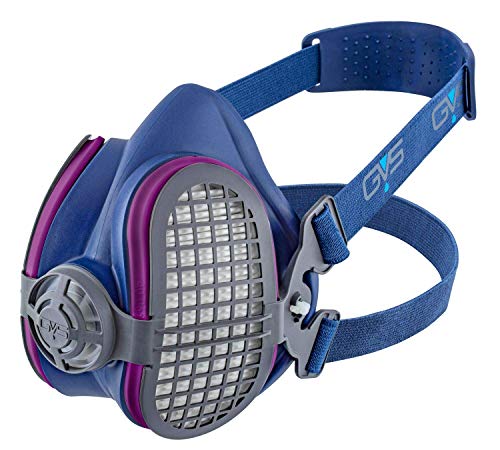
The Elipse takes a different approach: the filters sit inside the low-profile body of the mask itself, so nothing sticks out sideways to catch on a splash guard or block the view down at the wheel. The pleated P100 filters are included, replaceable and reusable, and this nuisance version adds an activated carbon layer that softens low-level odors from glaze rooms and kiln areas. The flexible facepiece is compact and light, which suits potters who wear a mask for short, frequent bursts all day long. Note that the two sizes run differently from 3M sizing, so measure carefully: the M/L suits most adults, while smaller faces should look at the S/M version sold as the SPR451.
Specs
- Size: M/L (S/M sold as SPR451)
- Filters: P100, included and replaceable
- Approval: NIOSH TC-84A-6950
- Facepiece: Flexible TPE, low-profile design
- Extra: Activated carbon layer for nuisance-level odors
5. Honeywell North 550030M 5500 Series Half Mask
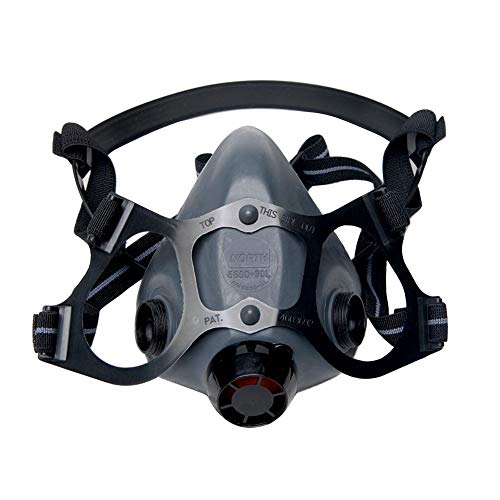
The North 5500 Series is the workhorse budget facepiece in the Honeywell North line. The elastomeric mask uses a simple, low-maintenance design with few parts to clean or lose, which makes it a practical choice as a dedicated glaze-mixing mask that lives by the raw materials shelf. It connects to filters with the threaded North N-Series system rather than a bayonet mount, so it pairs with North filters such as the 7580P100 pancake pair rather than 3M filters; the two ecosystems are not interchangeable. Fit and function are straightforward, and for potters who want a genuine NIOSH-approved platform from a major brand at the budget tier, it covers the essentials without extras.
Specs
- Size: Medium (550030S Small and 550030L Large also available)
- Facepiece: Elastomeric half mask
- Connection: Threaded North N-Series connectors
- Filters: Sold separately; pairs with North 7580P100 filters
- Design: Low-maintenance facepiece with minimal parts
How to Choose a Respirator for Pottery Work
Start with the filter class. NIOSH ratings combine a letter for oil resistance with a number for filtration efficiency, and P100 sits at the top of both scales: the filters capture at least 99.97 percent of airborne particles and resist oil-based aerosols. Dry clay and glaze dust is exactly the fine, dry particulate this class is made for, so P100 is the sensible default for mixing, sanding and cleanup. P95 filters are a workable step down for lighter dust, while basic N95 disposables leave gaps in fit that a reusable facepiece avoids.
Fit matters more than any single feature. A respirator only protects when air passes through the filters, not around the edges, so choose the size honestly, tighten the straps evenly, and run a user seal check every time the mask goes on. Facial hair along the sealing line will leak, no matter how good the mask is. Silicone face seals generally conform more easily and clean up well after dusty work, while elastomeric facepieces cost less and tolerate rough handling.
Finally, think about the filter ecosystem and daily comfort. Bayonet systems from 3M make filter swaps fast, and flat pancake filters sit close to the face so they stay out of the way at the wheel. Threaded North filters are equally secure but slower to change. An exhalation valve reduces heat and moisture buildup during long sessions, and a mask light enough to forget about is a mask that actually gets worn. Wet cleaning methods, such as mopping instead of sweeping and sponging surfaces down, remain the first line of defense; the respirator backs them up.
Who Should Skip These Half Masks
Skip these picks if facial hair crosses the sealing surface and cannot be trimmed back, because no half mask will seal reliably over a beard. Skip them if the task also throws debris toward the eyes, such as grinding or heavy sanding without a separate face shield, since a half mask leaves the eyes uncovered and a full facepiece or shield pairing makes more sense. Anyone who finds breathing through a respirator difficult should talk to a medical or occupational health professional before relying on one. And if clay work in the studio is entirely wet, with no dry mixing, sanding or sweeping, a reusable respirator may be more protection than the routine requires.
Frequently Asked Questions
Why do potters need P100 filters instead of regular dust masks?
Clay and glaze dust contains respirable crystalline silica, particles small enough to reach deep into the lungs. P100 filters are rated by NIOSH to capture at least 99.97 percent of airborne particles, and a reusable facepiece seals far more reliably than a loose disposable mask, so the combination addresses both the fineness of the dust and the fit problem.
How often should P100 filters be replaced in a pottery studio?
Replace particulate filters when breathing through them becomes noticeably harder, when they are damaged, or when they are visibly loaded with dust that cannot be shaken off. In an active studio with regular dry work, many potters treat filters as a consumable on a schedule of weeks rather than months, and storing the mask in a sealed bag between sessions keeps the filters cleaner for longer.
Can I wear one of these respirators with a beard or glasses?
Glasses are usually fine, especially with downward-venting exhalation valves that reduce fogging. A beard is a different matter: hair along the sealing line breaks the seal and lets unfiltered air in, which is why respirator fit guidance requires a clean-shaven sealing surface. Short stubble in the seal area can be enough to cause leaks.
What is the difference between N95, P95 and P100 ratings?
The letter describes oil resistance: N filters are not resistant to oil, R filters resist it, and P filters are oil proof. The number describes minimum filtration efficiency, so 95 means at least 95 percent of particles are captured and 100 means at least 99.97 percent. For dry studio dust, the number matters most, which is why P100 is the common recommendation.
Final Verdict
For a first studio respirator, the 3M 6391 assembly removes every excuse: the facepiece and P100 filters arrive together and the setup is proven and inexpensive to maintain. Potters who wear a mask all day should look at the silicone comfort of the 7502, or the 6502QL when constant interruptions make the drop-down latch worthwhile. The GVS Elipse SPR456 suits anyone who wants the lowest-profile mask at the wheel, and the Honeywell North 550030M keeps a genuine NIOSH-approved option at the budget tier. Whichever facepiece is chosen, pair it with P100 filters, a careful fit and wet cleaning habits, and the dustiest jobs in the studio become far more manageable.









