
Key takeaways
- Compare the best pottery trimming tools for leather-hard clay, from titanium-fused blades to classic ribbon loops, with specs, care tips, and advice.
Trimming is the stage where a thrown pot gets its finished silhouette. Once a piece reaches leather-hard, a good trimming tool cuts away the extra clay left at the base, carves a clean foot ring, and refines the outer wall so the pot feels balanced in the hand. The wrong tool chatters, tears grog-heavy clay, or dulls so quickly that every pass becomes a fight.
The five pottery trimming tools below cover the main trimming styles used at the wheel: flat titanium-fused blades, one-piece double-ended tools, classic ribbon loops, and simple stainless steel profiles. They were chosen for edge material, head shape, grip comfort, and whether the edge can be sharpened again once it dulls.
As an Amazon Associate, we earn from qualifying purchases.
Quick Answer
For most wheel throwers, the Xiem XST17 is the safest first buy: a one-piece tempered stainless tool with two cutting profiles and grips that stay visible in the splash pan. If you trim daily or work with grog-heavy stoneware, step up to the Xiem titanium-fused triangle. On a tight budget, the Kemper KSP1 ribbon tool covers basic foot work well.
The Best Pottery Trimming Tools Compared
1. Xiem Tools USA Titanium-Fused Trimming Tool, Medium Triangle — Premium Pick
Xiem’s titanium-fused line is built for potters who trim a lot of ware and are tired of edges going dull mid-session. The blade is high carbon tempered stainless steel fused with a thin layer of titanium nitride, a treatment the maker rates at roughly triple the hardness of the untreated steel. In practice that means the edge resists the abrasion of grogged stoneware and porcelain longer between sharpenings, and the fused layer adds rust resistance in a damp studio.
The medium triangle head is the most versatile shape in the series for general foot work. The straight edges level a base quickly, the corners cut a crisp inside angle on a foot ring, and the flat face can pare down an outer wall in controlled passes. The handle is hand-sanded beech hardwood, shaped to roll between the fingers as you change the angle of attack. The series also comes in small and large sizes and other head shapes, but the medium triangle is the shape that covers bowls, cylinders, and mugs on its own.
Specs:
- Blade: high carbon tempered stainless steel fused with titanium nitride
- Handle: hand-sanded beech hardwood
- Head shape: medium triangle
- Series sizes: small, medium, and large, with several head shapes
- Best for: frequent trimming, abrasive clay bodies, production work
2. Mudtools Do-All Trim Tool — Mid-Range, Best All-in-One
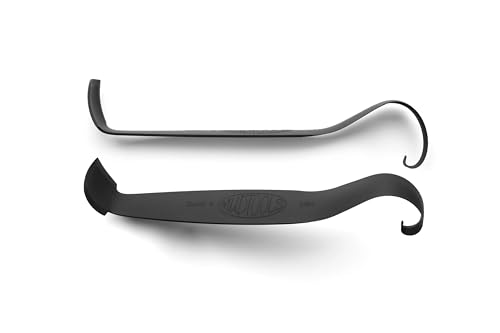
The Do-All is a different idea from a loop tool. It is cut from a single piece of steel and ground into two working ends: one end curls into a loop-style cutting edge that peels clay away in ribbons, and the other end is a flat, slightly crowned surface that smooths and compresses the clay you just cut. Many throwers trim an entire foot with this one tool, cutting with the loop end, then flipping it to burnish the foot ring with the flat end.
Because there is no handle joint, there is nothing to loosen or snap, and the edge is designed to be resharpened with a few strokes on a fine stone or diamond pad. It is made in the USA by Mudtools and suits medium and larger ware especially well, where the broad flat end has room to work; on very small cups the head can feel wide.
Specs:
- Model: SM-TT
- Construction: one-piece steel, double-ended
- Ends: curled loop cutting edge and flat smoothing surface
- Edge care: resharpenable
- Origin: made in the USA
- Best for: medium and large ware, potters who want one tool per pot
3. Xiem Tools XST17 Double-Ended Trimming Tool — Mid-Range, Best for Control

The XST17 is the trimming tool many studios hand to students, and it earns that role honestly. Each tool is handcrafted from a single piece of high-grade tempered stainless steel, with a different cutting profile at each end, so one purchase covers both aggressive clay removal and finer shaping near the foot. The edges arrive sharp and can be sharpened again when they dull, which stretches the life of the tool well past disposable imports.
The bright yellow rubber grips are more than a color choice. They cushion the fingers during long trimming sessions, keep the tool from rotating in a wet hand, and make it easy to spot in a gray splash pan full of slip and trimmings. At about 6.25 inches long it is long enough for leverage on bowls yet short enough for controlled work on cups and small jars, and the stainless edge will not stain light porcelain the way a rusting carbon steel edge can.
Specs:
- Model: XST17-10130
- Blade: high-grade tempered stainless steel, one solid piece
- Design: double-ended, two cutting profiles
- Grip: bright yellow rubber handles
- Length: about 6.25 inches
- Edge care: can be sharpened
- Origin: made in the USA
- Best for: beginners, small to medium ware, porcelain
4. Kemper KSP1 Special Ribbon Tool — Budget Classic

Kemper’s Special Ribbon series has been a studio staple for decades, and the KSP1 is the shape most potters start with. Ribbon tools remove controlled amounts of clay with a thin, sharpened band of heavy stainless steel ribbon instead of a wire loop, which gives a cleaner, flatter cut on a foot and less drag on leather-hard walls. The KSP1 is double-ended, with a half-inch triangle at one end for corners and defined foot angles, and a half-inch rounded end for sweeping curves and concave bases.
The hardwood handle has a lacquered finish that shrugs off studio moisture, and the heads are firmly set so they do not twist under pressure. Ribbon edges are thin by design, so they reward a lighter touch: let the wheel do the work and take several shallow passes rather than forcing one deep cut. Treated that way, a KSP1 handles everyday trimming of mugs, bowls, and planters without complaint.
Specs:
- Blade: heavy stainless steel ribbon, sharpened edges
- Design: double-ended
- Ends: 1/2 inch triangle and 1/2 inch rounded
- Handle: hardwood with lacquered finish
- Origin: made in the USA
- Best for: everyday foot trimming, classrooms, budget studio setups
5. Mojiteor Stainless Steel Pottery Trimming Tool — Budget Double-Ender
This unbranded-style stainless tool pairs two useful profiles in one short body. One end forms a broad curl that behaves like a loop tool, lifting clay away in curls and letting you vary the depth of cut by changing the angle. The other end is a sharpened spade shape that gets into the corner where the foot meets the floor of the pot and tidies the line a loop cannot reach. For a new thrower who is not yet sure which trimming style suits them, it is an inexpensive way to try both.
The all-stainless construction will not rust in a wet studio and wipes clean, and at about 6 inches long it is easy to control on small ware. The trade-offs are expected at this level: the edge is not in the same league as tempered tool steel for long-term sharpness, and there is no cushioned grip. As a first tool or a class lender it does the job; daily throwers will outgrow it.
Specs:
- Model: Mojiter-1
- Material: stainless steel
- Design: double-ended curl and spade profiles
- Length: about 6 inches
- Curl width: about 1.34 inches
- Spade width: about 0.93 inches
- Best for: first-time buyers, spares, small ware
How to Choose Pottery Trimming Tools
Start with the edge material. Plain stainless steel is rustproof and fine for occasional trimming, but it dulls fastest. Tempered stainless and high carbon steel hold a keener edge and can be resharpened. Titanium-fused edges sit at the top: the hard surface layer resists abrasion from grog and silica in the clay, so the tool stays sharp through far more pots before it needs attention.
Match the head shape to the job. Loop and ribbon tools remove clay quickly and are the classic choice for cutting foot rings. Triangle heads level bases and cut square inside corners. Teardrop and rounded heads follow concave curves. Flat blades, like the smoothing end of the Do-All, finish and compress rather than cut. Most throwers end up owning one removal tool and one finishing profile.
Size the tool to your ware. A long tool gives leverage on wide bowls and platters but feels clumsy inside a small cup. If you mostly throw tableware, a tool around 6 inches with a medium head covers nearly everything. Throwers of large jars should look at the large sizes in a series.
Think about grip and visibility. Trimming sessions are wet, and a tool that twists in the hand will gouge a foot. Rubber grips and shaped hardwood handles both work, and bright colors help when the tool is hiding in slurry-colored trimmings.
Plan for sharpening. A resharpenable tool costs more up front and less over its life. If a listing does not say the edge can be sharpened, treat the tool as a consumable.
Who Should Skip These Tools
Hand builders who rarely throw on the wheel do not need dedicated trimming tools; a fettling knife and a serrated rib handle most slab and coil cleanup. Potters who do all their base shaping while the clay is still wet, using a rib at the throwing stage, may also find a trimming tool sits unused. If your studio or class provides shared tools, try the common shapes first before buying your own. If you need a full starter kit with a wire cutter, needle tool, and ribs as well, a general clay tool set is the better buy; every tool here does one job, trimming.
Frequently Asked Questions
When is clay ready for trimming?
Clay is ready at the leather-hard stage, when it is firm enough to hold its shape upside down without sagging, still cool and slightly damp to the touch, and cuts in clean ribbons rather than crumbling or smearing. Trimming too wet gums up the tool; trimming too dry causes chattering and dust.
Can pottery trimming tools be sharpened?
Most quality trimming tools can: tempered stainless, high carbon steel, and titanium-fused edges can be touched up with a fine stone, a diamond pad, or a small file, following the original bevel. Thin ribbon tools and the cheapest stainless tools are usually replaced once the edge is gone.
What is the difference between a loop tool and a ribbon tool?
A loop tool cuts with a closed loop of round or flattened wire and tends to plow through clay, removing material quickly. A ribbon tool cuts with a flat, sharpened band of steel, which shaves a flatter, cleaner surface and gives finer control on foot rings and flat bases.
How do I stop chattering when I trim?
Chattering usually means the clay is too dry, the edge is dull, or the tool is being pushed instead of allowed to cut. Try trimming earlier at a softer leather-hard stage, sharpen or swap the tool, slow the wheel, brace your hands against each other, and take shallower passes.
Final Verdict
For a single dependable purchase, the Xiem XST17 covers the widest range of everyday trimming with a resharpenable tempered stainless edge and grips made for wet hands. Potters who trim constantly, or who work in abrasive stoneware, should step up to the Xiem titanium-fused medium triangle for its harder, longer-lasting edge. The Mudtools Do-All is the pick for anyone who likes to cut and finish with one tool, while the Kemper KSP1 remains the budget classic for classrooms and first studios, and the Mojiteor double-ender is a low-cost way to learn which trimming style fits your hands.










