
Key takeaways
- Compare the best clay traps for pottery studio sinks, from the compact 43 oz GT-43 to the 3.5 gallon HV kit, with sizing, clearance and bottle swap tips.
- Top Pick: Practicon Gleco Trap System, 64 oz
- Runner-up: Practicon GT-43 Gleco Sediment Trap System
- Also consider: Practicon Gleco Trap 3.5 Gallon HV System Kit
Clay and glaze sludge should never go straight down a studio drain. Wet clay does not dissolve, it settles, hardens and builds up inside pipes until the sink backs up and a plumber has to cut the blockage out. A clay trap solves this by slowing the wastewater under your sink so the heavy solids drop into a removable container before the water continues to the drain. The Practicon Gleco Trap line is the system most pottery studios rely on, and it comes in sizes that cover everything from a single home wheel to a shared classroom sink. This guide compares five Gleco Trap setups, explains how to measure your under-sink space, and shows which size fits the way your studio actually works.
As an Amazon Associate, we earn from qualifying purchases.
Quick Answer
The Practicon Gleco Trap System in the 64 oz size is the right starting point for most pottery studios: its clear bottle, side drain valve and fast bottle swaps keep clay out of your pipes. Choose the 43 oz GT-43 for shallow sink cabinets and the 3.5 gallon HV kit for shared or school studios.
How to Choose
Start with clearance. Measure from the center of the horizontal waste line under your sink down to the floor or cabinet base. That vertical distance decides which bottle you can fit. The 43 oz GT-43 needs a minimum of about 13 inches, the 64 oz bottle needs more room, and the 3.5 gallon bucket systems need roughly 17 inches. If your sink sits in a shallow vanity or a tight utility cabinet, measure before you order, because a trap that does not fit cannot be installed at all.
Next, match capacity to how many people rinse tools and buckets at the sink. A solo home potter can go weeks on a 43 or 64 oz bottle. A teaching studio, where a class rinses bats, sponges and splash pans after every session, fills bottles far faster and is better served by a 3.5 gallon settling bucket or by keeping spare bottles ready to swap.
Check the connection type as well. Gleco Trap systems are built around standard 1.5-inch slip-joint plumbing and include the tailpiece, washers and nuts needed to tie into a typical sink drain. A side drain valve is worth having: it lets you siphon the water out of a full bottle before you unscrew it, so the swap stays dry instead of spilling sludge across the cabinet floor. Clear bottles are another practical detail, since you can see the fill level at a glance instead of guessing.
Finally, confirm your local rules. Many municipalities treat clay and glaze waste as material that must be kept out of the sewer system, and a settling trap is the standard way studios comply. Keep heavy-metal glaze waste out of the trap and handle it according to your local hazardous waste guidance.
The 5 Best Clay Traps for Pottery Studios
1. Practicon Gleco Trap System, 64 oz

The 64 oz Gleco Trap System is the classic under-sink setup and the one most often recommended for home and small shared studios. Wastewater enters the clear bottle, clay and plaster settle to the bottom, and clearer water exits to the drain. When the solids reach the fill line, you open the side valve to drain off the water, unscrew the bottle and thread on a clean one. Practicon rates the change at well under two minutes, and the kit includes the trap assembly, one replacement bottle and the fittings for a standard drain.
Specs:
– Capacity: 64 oz settling bottle
– Dimensions: 12.4 x 12.24 x 6.57 inches
– Weight: 2.35 pounds
– Model number: 7078713
– Connection: 1.5-inch slip-joint plumbing
– Features: clear bottle with fill line, side drain valve, meets US Uniform Plumbing Code
2. Practicon GT-43 Gleco Sediment Trap System

The GT-43 is the compact version of the same system, built around a 43 oz bottle for sinks with limited room underneath. Pottery suppliers recommend it for deep utility sinks and cabinets where the taller 64 oz bottle will not clear the waste line. It needs a minimum of about 13 inches of clearance, and the package includes two 43 oz bottles, a storage lid for the spare, a sink tailpiece, slip joint washers and nuts, a flat washer and a spare O-ring, so everything for the install is in the box.
Specs:
– Capacity: 43 oz settling bottle, two bottles included
– Dimensions: 12.49 x 12.17 x 6.58 inches
– Weight: 2.24 pounds
– Model number: 7078726
– Minimum clearance: about 13 inches
– Features: air-tight lid, leak-proof ports, made in the United States
3. Practicon Gleco Trap 3.5 Gallon HV System Kit

For busy teaching studios and production spaces, the 3.5 gallon HV kit replaces the small bottle with a full settling bucket. The air-tight lid carries threaded inlet and outlet extensions that hold an air pocket inside the bucket, which keeps the contents sealed and odor contained between changes. The larger volume means far less frequent emptying when a whole class rinses tools at once, and it connects to the same standard 1.5-inch threaded ports as the bottle systems. Plan on roughly 17 inches of under-sink clearance for this one.
Specs:
– Capacity: 3.5 gallons
– Dimensions: 16.1 x 13.4 x 13.2 inches
– Weight: 4.19 pounds
– Model number: 7078722
– Connection: 1.5-inch threaded inlet and outlet
– Features: air-tight lid, air-pocket design for dry, sealed changeouts
4. Practicon Gleco Trap 3.5 Gallon HV Refill
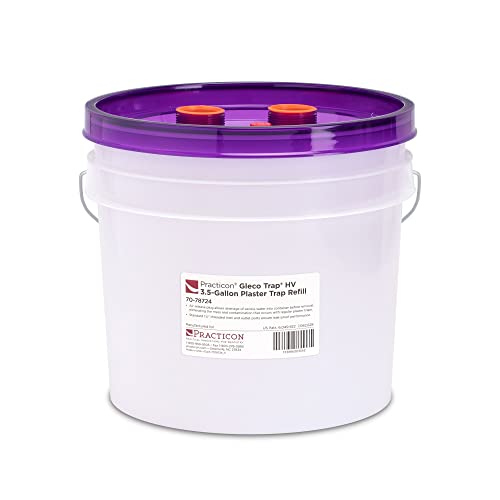
Studios already running an HV bucket need a clean refill on hand so a full trap never shuts the sink down mid-class. This refill is the replacement 3.5 gallon bucket for the HV system, built to the same patented design that lets you pre-drain the old bucket for a dry, mess-free change. Installation notes call for 6 inches of clearance between the top of the bucket and the sink drain flange so the lid seals correctly. Keeping one refill in rotation turns trap maintenance into a quick swap instead of a cleaning session over a bucket of sludge.
Specs:
– Capacity: 3.5 gallons
– Package dimensions: 13.5 x 13.5 x 12.5 inches
– Weight: 3.19 pounds
– Model number: 7078724
– Fit: replacement bucket for Gleco Trap HV systems
– Features: pre-drain design for dry changeouts, air-tight sealing lid
5. Practicon Gleco Trap System Kit with Replacement Bottles
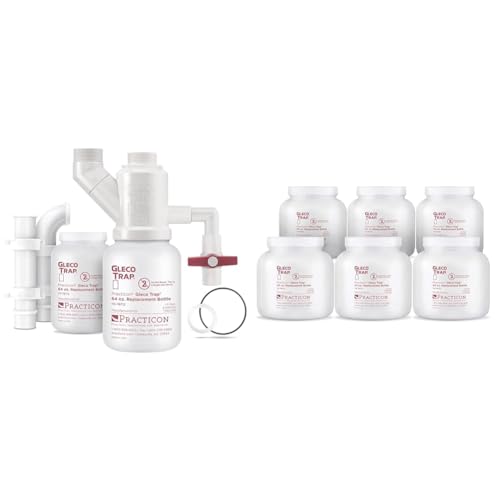
This bundle pairs the 64 oz Gleco Trap System with six 43 oz replacement bottles, which suits studios that would rather stock up once than reorder bottles through the year. The trap itself is the same clear-bottle, side-drain design as the standard 64 oz kit, and the spare bottles mean a full bottle can be swapped immediately and dealt with later. For a school program or a community studio with several wheels, that buffer of clean bottles is the difference between a one-minute swap and a sink that is out of service.
Specs:
– Capacity: 64 oz trap bottle plus six 43 oz replacement bottles
– Connection: 1.5-inch slip-joint plumbing
– Features: clear bottle with fill line, side drain valve, meets US Uniform Plumbing Code
– Best for: classrooms and shared studios with frequent bottle changes
Who Should Skip a Clay Trap
Skip the under-sink trap if you are not allowed to modify the plumbing, for example in a rented space where the sink belongs to the landlord. A three-bucket rinsing station, where tools soak and solids settle in the first bucket, protects the drain without touching any pipes. You can also skip it if your studio has no plumbed sink at all and you already work from buckets that you let settle and decant. And if your under-sink clearance is under about 13 inches, even the compact GT-43 will not fit, so a bucket settling system or an above-counter routine is the practical route. Everyone else with a plumbed studio sink, especially anyone reclaiming clay or washing bats and tools daily, should treat a trap as basic infrastructure rather than an optional accessory.
Frequently Asked Questions
Why does a pottery studio sink need a clay trap?
Clay particles are heavy and do not dissolve in water. They settle inside drain pipes, compact over time and eventually block the line completely. A clay trap slows the flow under the sink so those solids fall into a removable bottle or bucket instead of your plumbing.
What size clay trap fits under my sink?
Measure from the center of the horizontal waste line to the floor. The 43 oz GT-43 needs about 13 inches of clearance, the 64 oz bottle needs more, and the 3.5 gallon HV bucket needs roughly 17 inches. Always measure before ordering, since fit is the deciding factor.
How often do you change a clay trap bottle?
It depends on how many people use the sink and how much clay gets rinsed. A solo potter may go several weeks between swaps, while a teaching studio can fill a bottle in days. The clear bottle shows the fill level, so change it when the settled solids reach the fill line.
Can a clay trap handle glaze and plaster waste too?
Yes, the Gleco Trap systems are designed for clay and plaster sediment, and they catch glaze sludge as well. Let the contents settle and dry, then dispose of the solids according to local rules. Waste from glazes containing heavy metals should follow your local hazardous waste guidance rather than household trash.
Final Verdict
For most studios, the 64 oz Gleco Trap System is the buy: it fits standard plumbing, the clear bottle makes maintenance obvious, and swaps take about a minute once the side valve drains the water. Tight cabinets point to the 43 oz GT-43, while shared and school studios should go straight to the 3.5 gallon HV kit and keep an HV refill in rotation. Whichever size you pick, the habit that matters is changing the bottle on time, before settled clay has any chance to reach your pipes.









