
Key takeaways
- Compare five armature wires for clay sculpting, from fine 18 gauge detail coils to a heavy 8 gauge roll, with gauges, lengths, and temper explained.
Every clay figure that stands, leans, or reaches without sagging has a skeleton doing quiet work under the surface. That skeleton is armature wire, and choosing the right gauge matters more than choosing the right brand. Wire that is too thin buckles under wet clay, while wire that is too thick fights every bend and can tear through thin sections. The good news is that sculptors have largely settled on one material: soft aluminum armature wire. It bends by hand, holds a pose once bent, does not rust, and cuts with ordinary pliers. This guide compares five aluminum armature wires sold in coils, from a fine 18 gauge detail wire to a heavy 8 gauge roll built for large figures, so you can match the wire to the size and weight of your next sculpture.
As an Amazon Associate, we earn from qualifying purchases.
Quick Answer
Start with a mid-weight aluminum armature wire around 1/16 inch or 3 mm for general figures, and add a fine 18 gauge coil for fingers, tails, and detail work. The five wires below cover every common gauge a clay sculptor needs, all in soft, non-rusting aluminum that bends by hand and holds a pose.
How to Choose
Gauge and diameter come first. Wire gauge runs in reverse: the lower the gauge number, the thicker the wire. For clay work, three sizes cover almost everything. Fine wire around 18 gauge (about 1 mm) suits fingers, ears, tails, whiskers, and small creatures. A mid-weight wire around 1/16 inch (about 1.6 mm) is the classic all-rounder for tabletop figures up to roughly a foot tall. Heavy wire at 3 mm or 8 gauge (about 3.3 mm) carries the torso and legs of larger pieces and figures in dynamic poses. When one strand is not stiff enough, twist two strands together rather than jumping straight to the thickest coil; a twisted pair is stronger than a single strand of the same total weight and stays easier to bend.
Length matters more than beginners expect. A single 12 inch figure can use several feet of wire once you account for the spine, both legs, both arms, the neck, and the extra length anchored into the base. Short 30 to 50 foot coils are fine for occasional small work, while anyone sculpting weekly should look at the long 128 and 450 foot rolls, which bring the cost per figure down and keep one gauge consistent across a series.
Temper and material. Armature wire should be soft-temper (dead soft) aluminum. It is sold specifically to be bent by hand and to stay where you put it. Hard craft wire and steel wire spring back, fight small adjustments, and can rust inside air-dry or oil-based clay. Copper wire works but is heavier and costs more for the same strength. Anodized aluminum adds a thin colored coating that changes nothing structurally; pick it when the wire itself will show in the finished piece.
Match the wire to the clay. For polymer clay, aluminum wire is safe at normal baking temperatures and is the standard internal support. For air-dry and oil-based clays it simply stays inside the finished piece. For ceramic clay that will be kiln fired, treat wire as a temporary building aid only: build over it, then remove it or design the piece to be hollowed before firing, because no wire in this guide is rated for kiln temperatures.
The 5 Best Armature Wires for Clay Sculpting
1. Jack Richeson Armature Wire, 1/16 Inch x 50 Feet (Premium)

Jack Richeson is the name most sculpture teachers reach for, and this coil is the reference point for the category. It is sold specifically as armature wire, with the listing naming clay sculpting, paper mache, and plaster roll work as its intended uses. The 1/16 inch diameter is the classic all-round size: stiff enough to carry a tabletop figure, thin enough to bend into hands and facial supports without tools. If you only buy one coil, this is the gauge to start with.
Specs
- Material: Aluminum
- Diameter: 1/16 inch (0.063 inch, about 1.6 mm)
- Length: 50 feet
- Model number: 220394
- Tensile strength: 100 MPa (per manufacturer listing)
- Best for: General figure armatures in clay, paper mache, and plaster
2. TecUnite Aluminum Craft Wire, 3 mm, 10 m Roll (Budget)
The TecUnite roll is a straightforward heavy-gauge option at 3 mm, which is about 1/8 inch. That thickness suits the spine and legs of mid-size figures, doll skeletons, and any section that has to carry real weight. The listing describes the wire as soft and easy to bend by hand despite its thickness, and the 32.8 foot length is enough for several figures. It is the simplest way to add a true structural gauge to a wire stash without buying a bulk roll.
Specs
- Material: Aluminum
- Diameter: 3 mm (about 1/8 inch)
- Length: 32.8 feet (10 m)
- Model number: 4336900327
- Finish: Silver
- Best for: Load-bearing cores in mid-size figures and doll skeletons
3. Tenn Well 9 Gauge Aluminum Craft Wire, 50 Feet (Mid-Range)
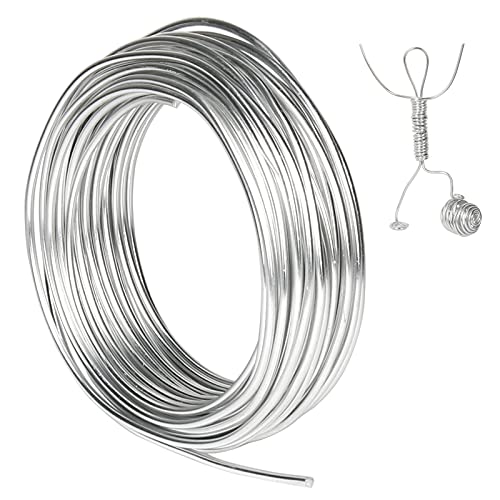
Tenn Well offers the same useful 3 mm thickness as the TecUnite roll but in a longer 50 foot coil, which makes it the better value for anyone building more than a couple of figures. The 9 gauge wire is polished aluminum, soft enough to shape by hand and rigid enough to hold a pose under wet clay. Sculptors who work in series, or who twist strands together for extra strength, will get through a 50 foot roll faster than expected, so the extra length is genuinely practical.
Specs
- Material: Aluminum
- Gauge: 9 gauge
- Diameter: 3 mm
- Length: 50 feet
- Model number: TW2105272
- Finish: Polished
- Best for: Repeated figure work and twisted double-strand cores
4. Mandala Crafts 8 Gauge Anodized Aluminum Craft Wire, 128 FT (Premium)

This is the heavy lifter of the group. At 8 gauge and about 3.3 mm, it is the thickest wire here, and the 128 foot roll is sized for large figures, maquettes, and sculptors who go through structural wire quickly. The anodized finish comes in a neutral tone, which helps the wire disappear under translucent clays and keeps it presentable where a support peeks through. Expect to use pliers for tight bends at this thickness; in return you get a core that will not wilt under a heavy torso.
Specs
- Material: Anodized aluminum
- Gauge: 8 gauge
- Diameter: About 3.3 mm
- Length: 128 feet
- Color: Neutral
- Item weight: 0.83 kg
- Best for: Large figures and high-volume structural work
5. Mandala Crafts 18 Gauge Anodized Aluminum Craft Wire, 450 FT (Budget)

Every armature kit needs a fine wire, and this 450 foot coil of 18 gauge is the detail specialist. At about 1 mm it bends with your fingers alone and is thin enough for individual fingers, toes, ears, tails, insect legs, and the small internal loops that keep thin clay sections from cracking off a thicker core. The very long roll means you can cut generously and practice bends without rationing. Pair it with any mid-weight wire above and you have a complete two-gauge setup for most figure work.
Specs
- Material: Anodized aluminum
- Gauge: 18 gauge
- Diameter: 1.02 mm (0.04 inch)
- Length: 450 feet
- Color: Silver copper tone
- Item weight: 13.12 ounces
- Best for: Fingers, tails, ears, and fine detail armatures
Who Should Skip Armature Wire
Skip wire coils if you want a ready-made support instead of building your own skeleton; a pre-built sculpture stand or a manufactured figure frame fits that need better. Skip aluminum wire if your support must survive a kiln firing in place, since aluminum is a temporary aid for ceramic work and has to come out before firing. Skip these coils, too, if you build large outdoor pieces that need welded steel, or if your pottery practice is entirely flat slab and tile work, where internal supports never come into play. Finally, if you only sculpt tiny miniatures, the two heavy gauges here are more wire than you will ever use; a single fine coil is enough.
Frequently Asked Questions
What gauge of armature wire is best for a first clay figure?
A mid-weight wire around 1/16 inch or 3 mm is the safest first purchase. It carries a tabletop figure without buckling and still bends by hand. Add an 18 gauge coil later for fingers and details once you know you enjoy figure work.
Can armature wire stay inside clay during firing or baking?
For polymer clay baked at home oven temperatures, yes, aluminum wire is the standard internal support. For kiln-fired ceramic clay, no: build over the wire as a temporary aid, then remove it or hollow the piece before firing, since aluminum is not rated for kiln heat.
How much wire does one sculpture use?
More than most beginners guess. A 12 inch figure typically takes several feet once the spine, legs, arms, neck, and base anchor are measured, and twisted double strands double the usage. A 50 foot coil covers a handful of figures; long rolls suit regular practice.
Is aluminum better than steel wire for armatures?
For hand sculpting, yes. Soft aluminum bends without tools, holds its new shape instead of springing back, and does not rust inside damp clay. Steel wire is stronger per strand but needs pliers for every adjustment and is better reserved for large, permanent frames.
Final Verdict
For most clay sculptors, the Jack Richeson 1/16 inch coil is the right first buy: it is the category standard, in the most useful all-round gauge. Add the Mandala Crafts 18 gauge roll and you can build complete figures with details. If your work runs larger, step up to the Tenn Well 9 gauge for everyday structural cores or the Mandala Crafts 8 gauge roll for serious weight, and keep the TecUnite 3 mm roll as an affordable spare. Buy the gauge for the figure you are actually making, and the wire will quietly do its job.










