
Key takeaways
- Compare the best oil-based modeling clay for sculpting, from professional plastilina for mold work to reusable classroom bars, with firmness specs.
Oil-based modeling clay, usually called plastilina or plasticine, is the sculpting material that never commits you to a final form. Because it is built on oils and waxes instead of water, it does not dry out in the air, cannot be fired or baked hard, and can be reworked for months or years. Sculptors use it for maquettes, character studies, and originals that will later be molded and cast, while animators and classrooms rely on it because the same block survives endless rebuilds. This guide compares five proven options across professional, mid-range, and budget tiers, and explains how firmness grades, sulfur content, and pack sizes should drive the choice.
As an Amazon Associate, we earn from qualifying purchases.
Quick Answer
For most sculptors, Chavant NSP Medium is the reference oil-based modeling clay: sulfur-free, meltable, and firm enough to hold carved detail. Monster Clay Hard suits large creature and character work, ReArt is a soft, generous mid-range block, and Pepy and Crayola bars cover animation, practice, and classroom use at the budget end.
The Best Oil-Based Modeling Clays Compared
1. Chavant NSP Medium, Brown, 1/4 Case — Premium Pick for Mold Work

Chavant NSP is the professional standard against which other plastilinas are measured. The formula replaces sulfur with wax and oil fillers, so it will not inhibit platinum silicone rubbers during mold making, which is the single biggest reason effects shops and fine-art sculptors stock it. Medium is the middle of three firmness grades, rated 33A on the durometer scale, and it softens at about 125 degrees F, so a warm room or a low heat source makes it easy to block out forms before it cools back into a carving-friendly firmness. It can be melted and brushed or poured at higher temperatures, then tooled once set. This listing is the quarter case: five 2 pound blocks, a sensible studio quantity for a full head or figure study.
Specs:
- Brand: Chavant
- Product: NSP Medium, Brown
- Pack: 1/4 case, five 2 lb blocks (10 lb total)
- Firmness: Medium, 33A durometer
- Softening point: about 125 degrees F (52 degrees C)
- Specific gravity: 1.58 g/cc
- Sulfur content: sulfur-free
- Block size: about 2.75 x 2.75 x 5 inches per block
- Colors in the line: Brown, Green, Tan
2. Monster Clay Premium Grade Modeling Clay, Hard, 4.5 lb — Premium Pick for Creature Work

Monster Clay is an oil and wax based sculpting medium developed for creature designers and mask makers, and the Hard grade is the version built for crisp edges and fine surface detail. The formula is low tack, so it releases cleanly from tools and fingers, and it has a low melting temperature for an oil-based clay, which means it can be softened, smoothed, or even poured with gentle heat. It is sulfur-free, fully reusable, and ships in a 4.5 pound oven-safe tub that doubles as the warming container. Hard grade holds undercuts and thin sections better than softer plastilinas, making it the natural pick for character sculpts that will be molded after weeks of refinement.
Specs:
- Brand: The Monster Makers
- Product: Monster Clay Premium Grade, Hard
- Model: MCP-5H
- Weight: 4.5 lb
- Base: oil and wax
- Firmness: Hard grade (Soft and Medium also exist in the line)
- Sulfur content: sulfur-free
- UPC: 686603385555
- Packaging: oven-safe reusable tub
3. ReArt Non-Drying Oil-Based Modeling Clay, 2.6 lb, White — Mid-Range Pick

ReArt sells a straightforward, generous block of oil-based clay aimed at students and hobby sculptors who want professional behavior without a professional brand premium. The 2.6 pound White block is soft and pliable straight from the pack, non-hardening, and reusable, so it works for practice figures, stop-motion tests, and small product studies. White is a practical color for sculptors who photograph their work or paint-test surface finishes, and the formula is non-toxic and no-bake, like every clay in this roundup. It lacks the graded firmness system of the Chavant and Monster Clay lines, so it sits best as a general-purpose bench clay rather than a mold-shop original material.
Specs:
- Brand: ReArt
- Product: Non-Drying Oil-Based Modeling Clay
- Weight: 2.6 lb
- Color: White
- Base: oil-based, non-drying
- UPC: 658362324922
- Non-toxic, no baking required
4. Pepy Oil-Based Plasticine Modeling Clay, Cream, 2 lb — Budget Pick for Animation

Pepy plasticine is a classroom and animation staple: a soft, non-drying bar clay that stays workable at room temperature and never skins over between sessions. The Cream 2 pound pack is sulfur-free and non-toxic, and the clay is formulated to give more volume per ounce than traditional oil-based bars, which matters when a class or a stop-motion set goes through clay quickly. It is softer than the professional grades above, so it suits armatures, quick studies, and claymation figures rather than sharp carved detail. Colors across the Pepy line can be blended into new shades, and the bars knead back together after a project is broken down.
Specs:
- Brand: Pepy
- Product: Oil-Based Plasticine Modeling Clay
- Weight: 2 lb
- Color: Cream
- Sulfur content: sulfur-free
- Non-toxic, non-drying, reusable
- Format: bar clay for hand modeling and animation
5. Crayola Modeling Clay, Bold Colors, 2 lb — Budget Pick for Classrooms
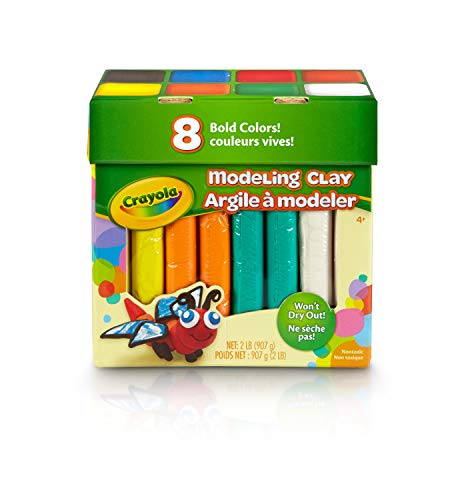
Crayola’s modeling clay is the most widely available oil-based clay in this group, and its wax and oil formula is genuinely non-hardening, unlike the brand’s air-dry products. The 2 pound jumbo assortment splits the clay into eight bold colors in 4 ounce packs, which keeps colors separate for classroom distribution and stop-motion characters. It resists water, stays pliable without conditioning, and is rated for ages 4 and up. The trade-off is softness: this is a beginner and classroom clay, best for learning to join, roll, and texture forms, not for holding the fine detail that the professional grades above are built for.
Specs:
- Brand: Crayola
- Product: Modeling Clay, Bold Colors
- Model: 57-0315
- Weight: 2 lb total
- Colors: 8 colors in 4 oz packs
- Base: wax and oil-based, non-hardening
- Age rating: ages 4 and up
- Manufacturer: Crayola
How to Choose Oil-Based Modeling Clay
Match firmness to the work. Soft grades block out large forms quickly and suit warm studios, while medium and hard grades hold carved lines, undercuts, and thin edges. Brands grade differently, so treat the soft, medium, and hard labels as within-brand steps rather than a universal scale.
Check sulfur content before mold making. Sulfur-bearing plastilina can inhibit platinum silicone rubbers and ruin a mold. If the sculpture will ever be molded, choose a sulfur-free clay such as the Chavant NSP, Monster Clay, or Pepy options above.
Plan around heat behavior. Oil-based clays soften with warmth and firm up as they cool. A hard grade in a cold studio can feel unworkable, while a soft grade in a warm room may slump; several of these clays can also be melted and brushed on for fast coverage over an armature.
Buy the right quantity and format. A 1 or 2 pound bar covers small studies and animation figures. Full figures and heads consume clay quickly, so the 4.5 pound tub and 10 pound quarter case formats exist for studio-scale work. Colored assortments help classrooms and animators; single neutral colors help sculptors judge form and shadow.
Remember it never hardens. Oil-based clay is a working material, not a finishing one. The finished piece stays soft forever unless it is molded and cast in resin, plaster, or silicone, so factor that step into any permanent project.
Who Should Skip Oil-Based Modeling Clay
Skip this category if the finished object needs to be durable as-is: oil-based clay cannot be fired, baked, or air-hardened, so a permanent piece requires polymer clay, air-dry clay, or kiln-fired ceramic clay instead. It is also the wrong choice for functional pottery such as mugs and bowls, and for outdoor pieces, since heat softens it and it never becomes waterproof. Finally, anyone bothered by an oily residue on hands and tools should test a small bar first.
Frequently Asked Questions
Does oil-based modeling clay ever dry out or harden?
No. The oil and wax base does not evaporate, so the clay stays pliable indefinitely as long as it is kept reasonably clean and covered. Old clay can be reconditioned by kneading, and most brands can be gently melted and re-poured to restore a smooth, uniform block.
Can oil-based modeling clay be baked or fired in a kiln?
No. Heat only softens or melts it, and it must never go into a kiln. A permanent version of an oil-based sculpture is made by building a mold around the clay original and casting the piece in a durable material such as resin or plaster.
Why does sulfur-free clay matter for sculpting?
Sulfur in traditional plastilina can react with platinum-cure silicone rubber and stop it from curing, which ruins molds. Sulfur-free formulas such as Chavant NSP and Monster Clay are made specifically to avoid that inhibition problem in mold shops.
How should oil-based modeling clay be stored between projects?
Keep it wrapped or in a sealed container away from heat sources and direct sun, since warmth softens it and dust sticks to the surface. Store colors separately to keep them clean, and keep finished sculptures covered so the soft surface does not pick up lint or dents.
Final Verdict
Oil-based modeling clay rewards sculptors who iterate: the same block can be roughed out, carved, melted down, and rebuilt for as long as a project takes. Chavant NSP Medium is the safest all-round professional choice, especially where silicone molds are planned, and Monster Clay Hard is the detail specialist for character work. ReArt offers an easy mid-range starting block, while Pepy and Crayola cover animation, practice, and classrooms at the budget end. Choose by firmness and sulfur content first, then by pack size.









