
Key takeaways
- How to choose pottery glazes for beginners and studios, from cone ranges and finishes to food safety, plus five brush-on glazes that fire at cone 5-6.
- Top Pick: Amaco Potter's Choice Blue Rutile PC-20
- Runner-up: Amaco Potter's Choice Oatmeal PC-31
- Also consider: Amaco Potter's Choice Toasted Sage PC-43
A glaze turns a plain bisque pot into a finished piece. It sets the color, the shine, and whether a mug or bowl is safe to eat and drink from. For beginners, the number of glaze lines, cone ranges, and finish names can make the first jar hard to pick. Brush-on glazes solve much of that: they arrive mixed and ready, apply with a standard brush, and behave the same way jar after jar.
This guide explains how to match a glaze to your kiln and clay, then compares five brush-on glazes for first-time potters and studio shelves. Every pick fires at cone 5 to 6, the band most electric kilns use, and every one is lead free.
As an Amazon Associate, we earn from qualifying purchases.
Quick Answer
Choose a brush-on glaze for the cone your kiln fires, usually cone 5 to 6 for electric kilns. Pick a finish that suits the piece, confirm it is lead free and dinnerware safe for mugs and bowls, and fire a test tile before a full load. Blue Rutile PC-20 is the most forgiving first jar; Stoned Denim SW-101 suits potters who want a calm blue.
How to Choose Pottery Glazes
Match the cone range to your kiln
The cone range is the first filter. A glaze rated cone 5 to 6 matures in the band most electric kilns reach, while a cone 10 glaze needs a hotter firing and a cone 06 glaze belongs to low-fire earthenware. A cone 5 to 6 glaze fired to cone 06 stays underfired and dull, and a low-fire glaze taken to cone 6 can run off the pot. Check your kiln or studio firing schedule before ordering.
Pick a finish that suits the piece
Gloss finishes show color at full depth and wipe clean easily, suiting mugs, bowls, and plates. Matte and satin finishes soften the surface and hide small throwing marks, suiting sculptural pieces and vases. Breaking glazes pool in recesses and thin over raised texture, rewarding carved and stamped surfaces. Fluid glazes move more in the kiln and create layered effects, but need space near the foot. Decide the look first, then read the finish on the jar rather than judging by the wet color, because the fired result often differs from the liquid in the jar.
Check food safety before dinnerware
A glaze can be beautiful and still be wrong for a mug. For anything that holds food or drink, choose a glaze the maker labels lead free and dinnerware safe, and follow the firing instructions exactly, since an underfired glaze can leach more readily. Some colors in a line carry a dinnerware warning while the rest is safe, so read the label on the exact color. Decorative pieces and vases have more freedom, but any piece that touches food deserves the stricter check.
Brush-on or dipping
Brush-on glazes come ready to use in a jar and suit beginners, small batches, and studios without a mixing area. Three even coats, each dry before the next, is the standard for the lines in this guide. Dipping glazes suit production work and large pieces, but they need a bucket, a hydrometer, regular stirring, and a ventilated area for mixing dry materials. At a shared studio, brush-on jars travel well and avoid the storage and cleanup a dipping bucket demands.
Test on tiles before a full load
No glaze description replaces a test tile. Clay color changes a glaze more than any other single factor: the same blue turns muted on dark clay and bright on white stoneware, and a translucent glaze lets the clay body show through. Fire a small tile of your own clay with two or three coats and note the coat count and cone on the back. A short test round saves a full kiln load of surprises and builds a library of combinations.
1. Amaco Potter’s Choice Blue Rutile PC-20
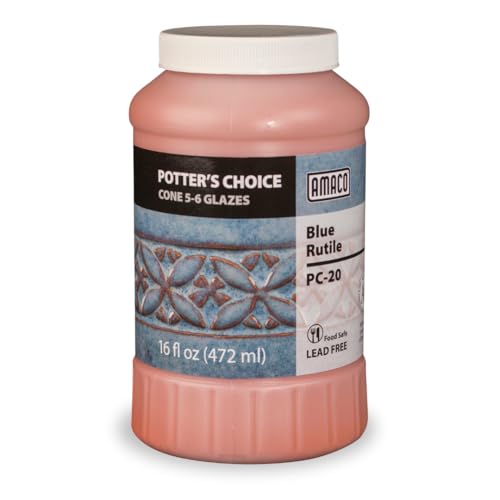
Blue Rutile is the most forgiving first glaze in the Potter’s Choice line. It fires to a glossy, variegated blue with pale rutile streaks that break over texture, so carved bands and stamped patterns show clearly. It layers well under and over other Potter’s Choice colors, making it a useful base for combining glazes, and it is one of the most widely stocked pottery glazes.
It applies in three brush coats and matures at cone 5 to 6 in oxidation. It suits white and light stoneware best, where the blue stays vivid, and holds a steady result from one firing to the next. Beginners who want a reliable blue that flatters texture should put this jar first.
Specs
- Brand: Amaco
- Line: Potter’s Choice
- Color: Blue Rutile PC-20
- Size: 16 oz (473 mL) pint jar
- Firing range: Cone 5 to 6, oxidation
- Finish: Gloss, variegated blue with rutile streaks
- Lead free: Yes
- Model number: 35401D
- ASIN: B0044SGZ6M
2. Amaco Potter’s Choice Oatmeal PC-31

Oatmeal is a quiet, toasty light beige that turns translucent where it thins over texture and breaks clear on raised surfaces. On its own it gives mugs and bowls a warm, calm finish. Its strength appears in layering: a band of Oatmeal over a darker glaze softens the edge and adds a creamy rim many potters use as a finishing touch.
It fires at cone 5 to 6 and suits smooth and textured work. It pairs well with Blue Rutile, Ancient Jasper, and other Potter’s Choice colors, so one jar supports many combinations. Potters who like neutral palettes will use this jar often.
Specs
- Brand: Amaco
- Line: Potter’s Choice
- Color: Oatmeal PC-31
- Size: 16 oz (473 mL) pint jar
- Firing range: Cone 5 to 6, oxidation
- Finish: Gloss, translucent toasty beige, breaks clear over texture
- Lead free: Yes
- Model number: 35470N
- ASIN: B00KEZ3VWA
3. Amaco Potter’s Choice Toasted Sage PC-43

Toasted Sage fires to a soft, muted sage green with grey undertones, a color that suits dinnerware sets, planters, and calm, modern studio work. It reads as a gentle green on white clay and deepens on darker bodies. It layers well too: under Light Sepia it stays soft and grey-green, and under Smokey Merlot it shifts toward a warm, mottled mauve.
It applies in three brush coats and matures at cone 5 to 6. It is lead free and suits beginners who want a quiet green, plus studio potters building a tableware palette around earthy tones.
Specs
- Brand: Amaco
- Line: Potter’s Choice
- Color: Toasted Sage PC-43
- Size: 16 oz (473 mL) pint jar
- Firing range: Cone 5 to 6, oxidation
- Finish: Gloss, soft sage green with grey undertones
- Lead free: Yes
- Model number: 35438C
- ASIN: B00A6VXJEM
4. Amaco Potter’s Choice Ancient Jasper PC-53

Ancient Jasper is the most dramatic glaze in this guide. It is a fluid, opaque glaze that shifts from soft black to olive green to rust red as the coats go on thicker, so the same jar produces a different result on a smooth bowl and a textured vase. The movement suits statement pieces and large bowls. It also layers well over Blue Rutile and under Oatmeal.
Because the glaze moves, leave space near the foot and keep coats off the bottom third on vertical pieces. It fires at cone 5 to 6 in oxidation and is lead free. Potters who want bold, changing color will find this jar rewarding.
Specs
- Brand: Amaco
- Line: Potter’s Choice
- Color: Ancient Jasper PC-53
- Size: 16 oz (473 mL) pint jar
- Firing range: Cone 5 to 6, oxidation
- Finish: Gloss, fluid, shifts black to olive green to rust red
- Lead free: Yes
- Model number: 1371059
- ASIN: B00KF18I08
5. Mayco Stoneware Stoned Denim SW-101

Stoned Denim is a muted denim blue from the Mayco Stoneware line, calmer than a bright cobalt and softer than a navy. It fires to an even, glossy blue that suits dinnerware, cups, and everyday studio pieces. The Stoneware line fires from cone 5 to 6 up to cone 9 to 10, so it also suits potters who move between mid-range and high-fire work, though the color shifts at the hotter end.
It comes in a pint jar, applies in three brush coats, and is lead free. It suits potters who want a dependable blue outside the Amaco line, or a studio that wants a denim tone the Potter’s Choice range does not offer. It is a steady glaze that behaves well on white clay and holds its color across a set.
Specs
- Brand: Mayco
- Line: Stoneware Classic
- Color: Stoned Denim SW-101
- Size: 1 pint jar
- Firing range: Cone 5 to 6, up to cone 9 to 10
- Finish: Gloss, muted denim blue
- Lead free: Yes
- Model number: SW101P
- ASIN: B00PEFDBYI
Who Should Skip These
Potters firing only low-fire earthenware at cone 06 should skip this list, since every glaze here matures at cone 5 to 6 and would underfire. Potters in reduction gas kilns should treat these picks with care, because both lines are made for oxidation firing and their colors shift in reduction. Anyone glazing large production runs may prefer dipping glazes, and potters who need a matte finish will find only gloss finishes here. If your studio fires only to cone 10, test each glaze first, since only the Mayco pick is rated that high.
FAQ
How many coats of brush-on glaze should a beginner apply?
Three even coats is the standard here. Let each coat dry before adding the next, keep the brush loaded, and stop at three unless the maker says otherwise. Thin coats fire pale; heavy coats run and pool at the foot.
Can I use these glazes on dark clay?
Yes, but fire a test tile first. The same glaze looks different on white stoneware, buff clay, and dark brown clay. Translucent colors such as Oatmeal let the clay body show through, while opaque colors such as Ancient Jasper cover more of it. A test tile is the only reliable preview.
Are these glazes safe for mugs and bowls?
Each glaze here is lead free, and both lines are rated dinnerware safe when fired as directed. Fire to the rated cone, keep glaze off the outside bottom of the foot, and read the label on the exact color before using it on food surfaces, since a few colors can carry a different food-safety note.
Why did my glaze run onto the kiln shelf?
Running usually means coats that were too thick, a glaze applied too close to the foot, or a firing hotter than the rated cone. Leave the bottom third of a vertical piece lighter, keep fluid glazes away from the foot, and always use kiln wash or a cookie under new combinations.
Final Verdict
For beginners and small studios, the safest way into glazing is a small shelf of brush-on glazes rated for your kiln. Blue Rutile PC-20 is the best first jar for its forgiving blue and strong layering, while Oatmeal PC-31 and Toasted Sage PC-43 cover neutrals and greens. Ancient Jasper PC-53 adds drama for statement pieces, and Stoned Denim SW-101 adds a calm denim blue from a second line. Pick one jar, fire a test tile on your own clay, and build the shelf one color at a time.









