
Key takeaways
- Compare the best diamond drill bits for pottery and ceramics, with sizes for drainage holes, wet and dry drilling picks, and shank types for every studio.
- Top Pick: Drilax 3-Piece Diamond Drill Bit Set (Premium)
- Runner-up: QUEFORET 11-Piece Diamond Drill Bit Set (Premium)
- Also consider: YLYL 15-Piece Diamond Drill Bit Set (Mid-Range)
Sooner or later, almost every potter needs a hole in a piece that is already fired. A planter comes off the shelf with no drainage, a glazed bowl wants to become a hanging planter, a lamp base needs a cord opening, or a sink basin needs a drain hole cut to size. Twist bits and masonry bits skate on glaze and chip the rim, because fired ceramic is hard, brittle, and unforgiving. Diamond drill bits solve the problem differently: instead of cutting with teeth, they grind through clay bodies and glaze with a rim of bonded diamond grit, leaving a clean round hole when run slowly with light pressure.
The five sets below cover the formats potters actually buy on Amazon, from a three-piece wet-drilling set in classic planter sizes to dry vacuum brazed bits that need no water at the bench. They split into premium, mid-range, and budget tiers, every set is rated by its maker for ceramic and porcelain, and the sizes concentrate on the small and medium diameters pottery work calls for rather than large plumbing sizes.
As an Amazon Associate, we earn from qualifying purchases.
Quick Answer
For most studios, the Drilax three-piece set is the safest start: its half, three-quarter, and one inch saws cover drainage and hanging-planter holes in glazed ware, and it is built for wet drilling. The QUEFORET eleven-piece dry set suits potters wanting many sizes without water. The YLYL fifteen-piece set is the mid-range option, while the Semderm set and BGTEC six millimeter ten-pack cover budget use and repeat drainage holes.
1. Drilax 3-Piece Diamond Drill Bit Set (Premium)
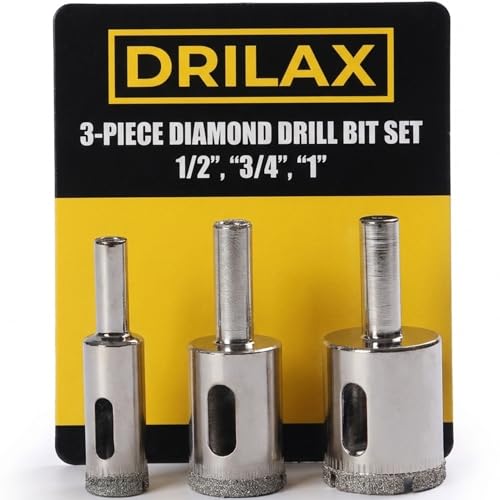
Drilax is the name most tile and glass workers reach for first, and this three-piece set is the pottery-friendly slice of the range. It bundles the three diameters that cover most studio drilling: a half inch saw for drainage holes and cord openings, a three-quarter inch saw for hanging planter hardware, and a one inch saw for lamp parts and larger fittings. Each saw cuts to a depth of one and one-eighth inches, which clears the base thickness of most planters and bowls.
The listing rates the set for porcelain, ceramic, glass, tile, granite, and quartz, and specifies wet drilling, so plan on a spray bottle or a slow drip at the cut. The saws have no center pilot bit, which is normal for diamond cores: start the rim at a slight angle to score a crescent, then level the drill upright once the groove holds the bit. For a potter drilling a handful of holes a month in finished ware, this is the buy-once set.
Specs:
– Sizes: 1/2 inch, 3/4 inch, and 1 inch diamond hole saws
– Cutting depth: 1-1/8 inches
– Drilling style: wet drilling with water cooling
– Rated materials: porcelain, ceramic, glass, tile, granite, quartz
– Model: DX-Diamond-Drill-Bits
– UPC: 600095801911
2. QUEFORET 11-Piece Diamond Drill Bit Set (Premium)

The QUEFORET set takes the opposite approach to cooling: its vacuum brazed diamond bits are built for dry drilling, so there is no water to manage around finished glaze. Eleven sizes run from 6 millimeters up to 65 millimeters, which spans everything from a drainage hole in a bonsai pot to a wide opening for a sink drain or lamp fitting. The triangle shank is the detail worth noting, because a three-sided shank resists spinning in the chuck when the rim bites, a common failure with smooth round shanks on glazed surfaces.
Vacuum brazing bonds the diamond layer directly to the steel core, and the maker positions the set for ceramic, porcelain tile, marble, and granite. Dry bits trade some smoothness for convenience and reward a slow start with pauses that let the rim cool. Studios that drill away from a water source, or that batch-drill bisque and glazed planters dry, will find this the most flexible premium option.
Specs:
– Sizes: 6, 8, 10, 20, 25, 28, 32, 35, 45, 50, and 65 millimeters
– Piece count: 11 bits
– Shank: triangle shank for grip in standard chucks
– Drilling style: dry drilling, vacuum brazed diamond
– Rated materials: ceramic, porcelain, marble, granite, tile
3. YLYL 15-Piece Diamond Drill Bit Set (Mid-Range)

The YLYL set is the wide-net option, and its listing speaks directly to this audience: it is sold as a glass and ceramic drill set for bottles and pots. Fifteen hollow core bits cover diameters from 6 millimeters to 50 millimeters, roughly a quarter inch to two inches, so a single kit handles drainage holes, hanging holes for planters, and the mid-size openings used by lamp and fountain parts. The bits are electroplated style hollow cores that remove a complete circle of material and need water for lubrication while they work.
Fifteen sizes is more than most potters will ever touch, but the value is that the odd size is already in the box when a commission calls for it. The maker lists ceramic, marble, glass, and stone as suitable materials. Keep a squeeze bottle at the bench, drill at the lowest practical speed, and let the rim grind rather than forcing the cut, and glazed stoneware bases come through with smooth edges.
Specs:
– Sizes: 15 diameters from 6 millimeters to 50 millimeters
– Piece count: 15 hollow core bits
– Drilling style: wet drilling with water lubrication
– Rated materials: ceramic, porcelain, glass, marble, granite, stone
– Model: YLYL011
– UPC: 739944296209
4. Semderm 10-Piece Diamond Hole Saw Set (Budget)
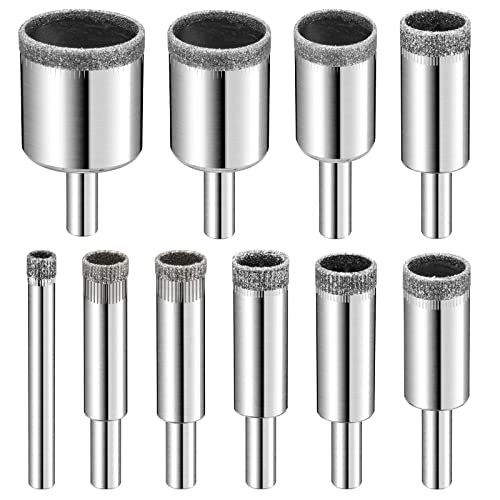
The Semderm set covers the same ground as the YLYL kit at a budget position: ten diamond-coated hole saws on carbon steel bodies, sized for the small and medium holes used on bottles, pots, and tiles, with the listing giving a maximum cutting diameter of 40.64 millimeters. The surface recommendations name glass, ceramic, porcelain, and stone, which maps neatly onto fired clay bodies from earthenware to porcelain.
Budget electroplated sets like this one are a sensible first purchase for a potter who drills occasionally, because the cost of learning sits in the bits rather than in ruined ware. Technique matters more than the badge on the box: mark the spot, start the rim at an angle, keep water on the cut, and support the piece on scrap wood so the exit side does not blow out. For a few planters a season, this set does the whole job.
Specs:
– Piece count: 10 diamond hole saws
– Body: carbon steel with diamond coating
– Maximum cutting diameter listed: 40.64 millimeters
– Rated materials: glass, ceramic, porcelain, stone
– Model: Semderm0001
– UPC: 605500325624
5. BGTEC 10-Piece 6mm Dry Diamond Drill Bits (Budget)

Every other pick here is a range of sizes; the BGTEC pack is ten copies of a single size, and for production potters that is exactly the point. Six millimeters, a quarter inch, is the classic drainage hole diameter for small and medium planters, and a potter drilling dozens of pots before a market stall goes through bits steadily. This pack of ten vacuum brazed dry bits means a fresh rim is always in the drawer, and the dry design keeps the workflow simple at a bench without water.
The bits use an artificial diamond layer on a steel body and are rated for granite, marble, masonry, tile and ceramic, and glass. Because each bit is small and the holes are shallow, drilling a planter base takes seconds of grinding once the rim seats. If your studio sells planters in batches and drainage holes are a weekly chore rather than an occasional fix, this single-size pack is the most practical line on the list.
Specs:
– Size: 1/4 inch (6 millimeters), ten identical bits
– Construction: vacuum brazed artificial diamond on a steel body
– Drilling style: dry drilling
– Rated materials: ceramic, tile, glass, marble, granite, masonry
– Model: DBT3106S1
– UPC: 769891571463
How to Choose
Start with the holes you actually drill. Drainage holes in planters cluster around 6 to 12 millimeters, hanging planter and hardware holes sit near a quarter to a half inch, and lamp cords and sink drains push toward one to two inches. A set covering your two most common sizes beats a giant kit you never open, unless you take varied commissions.
Next, pick a cooling style. Wet-drilling electroplated saws, like the Drilax, YLYL, and Semderm sets, run smoother and are the gentler choice on glazed surfaces, but they need water managed at the cut. Dry vacuum brazed bits, like the QUEFORET and BGTEC picks, skip the water entirely and suit benches far from a sink, at the cost of more heat in the rim and a slower, more patient technique.
Shank shape matters on glaze: triangle and hex shanks resist spinning in the chuck, while smooth round shanks can slip when the rim catches. Whatever you choose, run the drill in rotation only, never in hammer mode, keep the speed low, and use feather-light pressure. Start the rim at a forty-five degree angle to cut a locating groove, then ease upright. Support the ware from beneath and stop before breakthrough to finish gently, which keeps the exit edge from chipping.
Who Should Skip Diamond Drill Bits
Skip these bits if your piece is still unfired. Greenware and leather-hard clay take holes easily with a plain twist drill or a trimming tool, and drilling before firing is faster and safer than drilling after. Skip them for tempered glass, which shatters rather than grinds, and for metal or wood, which need their own bit types. If your only job is one hole in soft ceramic wall tile, a carbide spear-point bit is simpler. And holes in concrete or reinforced masonry are a job for masonry core bits, not the small diamond sets gathered here.
Frequently Asked Questions
Can you drill a drainage hole in a glazed planter without cracking it?
Yes, with the right technique. Use a diamond bit sized to the hole, keep the cut wet unless the bit is rated for dry drilling, run the drill slowly in rotation mode only, and let the rim grind with light pressure. Supporting the base on wood and easing off at breakthrough keeps the glaze from chipping around the new hole.
Is it better to drill ceramic before or after firing?
Before firing is easier, because leather-hard clay cuts cleanly with ordinary hand tools. Drilling after firing is the fallback for thrifted pots, finished planters sold without drainage, and repairs, and that is where diamond bits earn their place. Bisque sits between the two: it drills faster than glazed stoneware but still calls for diamond and a gentle touch.
What drill settings should you use on pottery?
Use a standard cordless or corded drill in rotation mode with the hammer function off, set to a low speed range. Start the bit at an angle to establish a groove, then bring it upright, keep pressure light, and add water for wet-rated bits. High speed and heavy pressure overheat the rim, glaze the diamond layer, and crack ware.
How do you keep a diamond bit from wandering on glaze?
Start at a forty-five degree angle so one edge of the rim scores a crescent into the glaze, then slowly level the drill once the bit sits in its own groove. Painter’s tape over the mark gives the rim extra grip at the start, and a drilling guide or foam insert holds larger saws steady.
Final Verdict
For a general studio set, the Drilax three-piece kit covers the classic planter sizes with a wet-drilling rim that treats glaze kindly. Potters who drill dry or need many diameters should take the QUEFORET eleven-piece set, while the YLYL fifteen-piece kit is the mid-range answer for varied commissions. The Semderm set keeps occasional drilling inexpensive, and the BGTEC six millimeter ten-pack is the quiet workhorse for anyone drilling drainage holes batch after batch.









