Key takeaways
- Compare the best immersion blenders for mixing pottery glazes, with stainless shafts, variable speeds and easy-clean designs for studio buckets.
Open a bucket of dipping glaze that has sat for a week and you will find the same scene every time: a layer of water on top, a dense slab of settled material at the bottom, and a dried rim that crumbles back in as lumps. A paint stick can stir the top half, but it cannot re-suspend the heavy layer where the bucket meets the floor, and it leaves dry flecks that show up later as crawling and pinholing on fired ware. An immersion blender solves the problem in about a minute. Its caged blade pulls the whole column of glaze into a vortex, grinds soft lumps against the bell housing, and leaves a smooth, even suspension that pours and dips the way the recipe intended.
As an Amazon Associate, we earn from qualifying purchases.
Quick Answer
For most home studios, the MuellerLiving Ultra-Stick is the best immersion blender for mixing pottery glazes: its 500-watt motor re-suspends settled dipping glaze fast, and the stainless shaft wipes clean. The Braun MultiQuick 5 is the pick for splash control, while the Hamilton Beach 59765 suits thin glazes and slips on a budget.
Why a Stick Blender Works in the Glaze Room
A glaze is a suspension, not a solution. Left alone, the heavier particles sink and the water rises, so the specific gravity at the top of the bucket drifts away from the value the recipe assumes. The fix is shear: a fast-moving blade edge that tears soft agglomerates apart and keeps particles moving until the whole batch is uniform again. A stick blender delivers that shear in a tool that reaches the bottom corners of a one or two gallon bucket, starts gently enough to avoid a splash ring on the studio wall, and rinses clean under a tap in seconds.
Two studio rules matter more than any spec. First, a blender that touches glaze becomes a studio tool permanently. Dry glaze dust and many colorants contain silica and metal oxides that have no place near food, so buy a unit you can dedicate to the glaze room and label it. Second, rinse water from glaze tools should go into a settling bucket or clay trap, never straight down a household drain. A detachable stainless shaft makes both rules easy to follow, because the working end comes off, rinses in the trap bucket, and dries on a hook while the motor body stays clean.
The Five Picks for Glaze Mixing
MuellerLiving Ultra-Stick 500-Watt Immersion Blender

The Ultra-Stick is the strongest motor in this group, and thick dipping glazes are exactly where that shows. Its 500-watt copper motor holds speed when the blade meets the dense bottom layer of a settled bucket, so a batch that has sat for a month comes back to an even, lump-free suspension without long pulsing sessions. The speed dial gives you a gentle start for the first seconds, which keeps dry rim crumbs from flying, and the turbo setting finishes the job once the vortex is established. The stainless blending shaft detaches for rinsing, and the included beaker is a sensible size for mixing small test batches of a new recipe before committing to a full bucket.
Specs:
– Motor: 500 watts
– Speeds: 8 settings plus turbo mode
– Shaft: stainless steel, detachable
– Included: whisk attachment, milk frother, measuring beaker
– Model: MU-HB-02
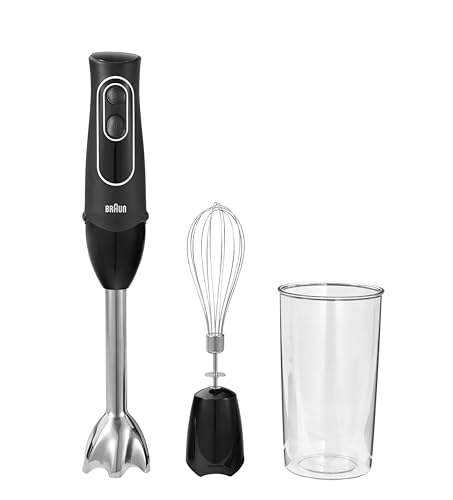
Braun MultiQuick 5 Immersion Blender
Braun built the MultiQuick 5 around splash control, and glaze mixing is a task where that design goal pays off daily. The bell-shaped PowerBell housing reduces the upward spray that coats bucket rims, forearms, and studio walls when a blade breaks the surface of a thin glaze. Two speeds plus a turbo burst cover most studio work: low for re-wetting the top layer, turbo for the settled base. Attachments swap with a click system, so moving from the blending shaft to the whisk for a small slip batch takes seconds, and the included beaker suits weighing out additions for test tiles.
Specs:
– Motor: 350 watts
– Speeds: dual speed plus turbo
– Shaft: stainless steel with splash-control bell housing
– Included: 20-ounce beaker, whisk attachment
– Model: MQ505
KitchenAid Variable Speed Corded Hand Blender
The KitchenAid earns its place on one control: a variable speed trigger. Instead of choosing between fixed speeds, you squeeze harder or softer, which means the blade can start at a crawl inside a full bucket and build to full mixing speed without the initial surge that throws glaze onto the rim. The removable eight-inch blending arm reaches deep into taller buckets, and the four-point stainless blade keeps material moving across the whole base. The snap-on pan guard, designed to protect cookware, also keeps the blade bell from grinding directly against a plastic bucket floor. A three-cup blending jar with a lid is included for covered test batches.
Specs:
– Motor: variable speed, trigger controlled
– Speeds: continuously variable
– Shaft: removable 8-inch arm, 4-point stainless blade
– Included: 3-cup blending jar with lid, pan guard
– Model: KHBV53, Matte Black
Cuisinart Smart Stick Two-Speed Hand Blender
The Smart Stick keeps the control scheme as simple as it gets: a fingertip slide switches between low and high, with a pulse option for short bursts. That pulse is genuinely useful in the glaze room, because short bursts break up the rubbery skin that forms on top of stored glaze without whipping air through the whole batch. The 300-watt DC motor is quiet for a studio tool, the stainless shaft goes in the dishwasher if you want a deeper clean than the trap bucket gives, and the 24-ounce mixing cup is a natural fit for single-fire test quantities.
Specs:
– Motor: 300 watts DC
– Speeds: 2 speeds with slide control and pulse
– Shaft: stainless steel, dishwasher safe
– Included: 24-ounce mixing and measuring cup
– Model: CSB-175P1, White
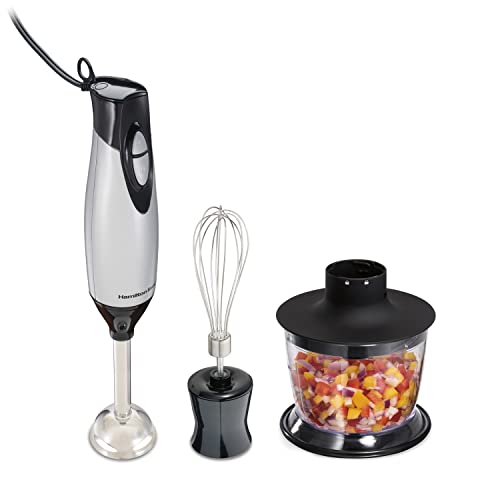
Hamilton Beach 4-in-1 Immersion Hand Blender
This is the budget-friendly route into powered glaze mixing, and it makes the most sense for thinner materials: slips, engobes, terra sigillata, and glazes you mix in small one-quart batches rather than deep buckets. The 225-watt motor and two speeds handle those jobs comfortably, and the blending wand detaches for a quick rinse. The whisk attachment helps with small slip batches, and the chopper bowl, while not a glaze tool, means the unit can earn its keep elsewhere in the studio for jobs like breaking down soft additives. Treat it as a light-duty mixer and it performs well within that role.
Specs:
– Motor: 225 watts peak power
– Speeds: 2 speeds
– Shaft: blending wand with stainless steel blades
– Included: whisk attachment, 3-cup chopper bowl
– Model: 59765
How to Choose a Blender for Glaze Work
Start with shaft material. Glazes are mildly abrasive and often alkaline, so a stainless steel shaft and blade hold up far better than plastic, which stains, crazes, and can shed into the batch. Detachable shafts matter just as much, because the shaft is the part that needs rinsing after every session while the motor body should stay dry and clean.
Next, match speed control to your buckets. A variable trigger or a wide speed dial lets you start slowly in a full bucket and avoid the splash ring; a simple two-speed unit is fine for small batches where the blade stays well submerged. Motor power only becomes decisive with thick dipping glazes and large settled buckets, where a stronger motor keeps blade speed steady instead of bogging down in the bottom layer.
Finally, think about reach and cleanup. An eight-inch arm covers most one and two gallon buckets; taller five-gallon pails may need the blade worked in stages from the top down. Smooth, sealed control surfaces wipe clean with a damp cloth, while deep seams and exposed screws collect dried glaze. Whatever you choose, plan the purchase as a permanent studio tool and budget a rinse bucket beside it.
Who Should Skip the Stick Blender Approach
High-volume studios mixing five-gallon batches every day will outgrow any tool in this list; a drill fitted with a mixing paddle moves more material with less strain. Potters who only ever brush on commercial glazes in small jars also gain little, since a palette knife or a quick shake handles those quantities. And if you cannot dedicate the blender to studio-only use, skip the idea entirely rather than share one unit between glaze and food.
Frequently Asked Questions
Can an immersion blender mix a full bucket of dipping glaze?
Yes, for the one and two gallon buckets most home studios use. Work the blade slowly from the bottom up, keep it submerged to limit air, and let a stronger motor handle thick, settled batches. Five-gallon pails are better served by a drill and paddle.
Should a glaze blender ever go back to the kitchen?
No. Once a blender has mixed glaze it should stay in the studio permanently. Glaze materials can contain silica and metal colorants, so the safe practice is a dedicated, clearly labeled studio unit that never touches food.
How do you clean glaze off a stick blender safely?
Detach the shaft and rinse it in a settling bucket or clay trap rather than the sink, so glaze solids stay out of household plumbing. Wipe the motor body with a damp cloth, let the shaft dry fully, and empty the trap bucket once solids build up.
Will blending add bubbles to the glaze?
It can if the blade breaks the surface or runs at top speed in a shallow batch. Keep the bell submerged, start at low speed, and let the mixed glaze rest before dipping so any incorporated air can rise out.
Final Verdict
For a single blender that handles everything from a settled dipping glaze to a small test batch, the MuellerLiving Ultra-Stick is the strongest all-round choice, with the Braun MultiQuick 5 close behind for anyone who prizes splash control. The KitchenAid suits potters who want fine trigger control, the Cuisinart keeps things simple and quiet, and the Hamilton Beach covers light-duty mixing at the lowest commitment. Pick by bucket size and glaze thickness, dedicate the unit to the studio, and your glaze shelf will stay consistent from firing to firing.