Key takeaways
- Roll even pottery slabs by hand. Compare wooden clay rolling pins with guide sticks, acrylic rollers, and a marble pin, with specs, sizing, and care tips.
- Top Pick: Sasylvia Wooden Rolling Pin Guides: Best Guides-Only Upgrade
- Runner-up: AUGSUN Acrylic Clay Roller: Best for Polymer Clay and Small Sheets
- Also consider: Final Verdict
Slab building lives or dies on even thickness. A slab that is thick in the middle and thin at the edges warps in drying, cracks at the joins, and fires unevenly, so the humble clay rolling pin does more for hand-built work than almost any other bench tool. A pin takes up almost no studio space, needs no setup beyond a flat surface and a piece of canvas, and gives you direct control over how the clay moves. For home studios, classrooms, and anyone building plates, boxes, tiles, or sculptural forms from sheet clay, it is the standard way to flatten clay.
The five picks below cover the main ways potters roll slabs by hand. Two are complete wooden pin kits with thickness guide sticks and a work cloth. One is a guides-only set for potters who already own a pin they like. One is a clear acrylic rod for polymer clay and small sheets, and one is a heavy marble pin whose weight does the work on stiff clay.
As an Amazon Associate, we earn from qualifying purchases.
Quick Answer
For most hand builders, a wooden clay rolling pin used with guide sticks is the most reliable way to roll even slabs without a slab roller machine. Full kits pair a long wood pin with thickness guides and a work cloth, while acrylic rods suit polymer clay and small pieces.
Newtay 12 Pcs Pottery Tools Set: Best Complete Slab Kit
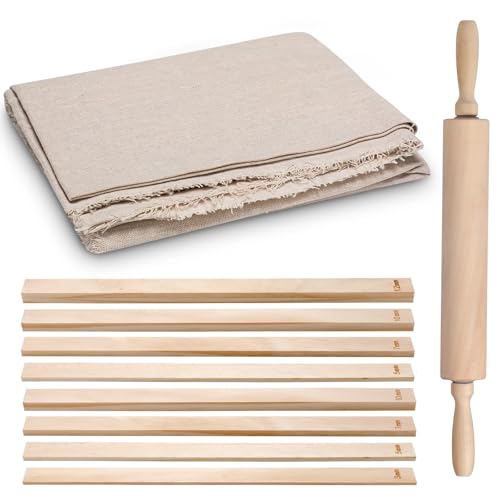
The Newtay set is the most complete starting point in this roundup because it includes everything the guide-stick method needs in one box: a long wooden pin, ten guide sticks in five thicknesses, and a linen tablecloth to roll on. The pin is a plain solid wood rod about 17.7 inches long, long enough to span a full-size slab plus the guide sticks on either side of the clay. Plain rods have no handles or bearings, and that is an advantage for clay work, because there are no handle joints to trap clay and the barrel wipes clean in seconds.
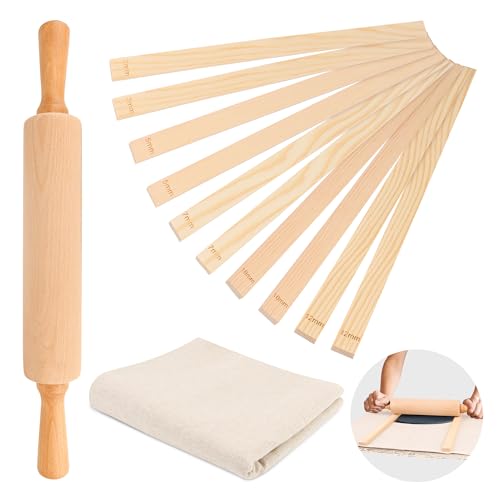
The guide sticks are the heart of the set. Place one stick of the chosen thickness on each side of the clay, then roll until the pin rides on both sticks, which guarantees a slab of matching thickness edge to edge. Five steps from about 0.12 to 0.47 inches cover thin tile work through sturdy box walls, and the linen cloth lets you lift or flip the sheet without stretching it.
Specs:
- Pin: solid wood rod, about 17.7 in (45 cm) long
- Guide sticks: 10 pieces in 5 sizes
- Slab thicknesses: about 0.12, 0.2, 0.28, 0.39, and 0.47 in
- Work surface: linen tablecloth included
- Total pieces: 12
- Model: JZ-Newtay-861
- Tier: budget
AHIER 12 Pcs Pottery Tools Set: Budget Kit with a 17-Inch Pin
The AHIER set follows the same proven formula, with a 17-inch wooden rolling pin, ten wooden guide sticks in five sizes, and a linen tablecloth. The pin is marketed as a slab roller, and in practice it works the same way: roll the clay down in stages, turning the slab a quarter turn between passes, until the pin rests on the guide sticks and the thickness is locked in. The five guide sizes span about 0.12 to 0.47 inches, covering thin decorative sheets and structural walls alike.
Where this set makes sense is as a second station or a classroom spare. Schools and community studios go through guide sticks and cloths quickly, and a complete backup kit keeps a class moving when pieces go missing. The slightly shorter pin also suits smaller worktops and younger students.
Specs:
- Pin: wood, 17 in long
- Guide sticks: 10 pieces in 5 sizes
- Slab thicknesses: about 0.12 to 0.47 in across the five sizes
- Work surface: linen tablecloth included
- Total pieces: 12
- Tier: budget
Sasylvia Wooden Rolling Pin Guides: Best Guides-Only Upgrade

Not every potter needs a whole kit. If you already own a rolling pin you like, the Sasylvia set adds the missing half of the system: ten wooden guide sticks, two in each of five thicknesses, sized at about 13.4 by 0.8 inches. That length pairs well with standard studio pins, and the stick ends are engraved with their thickness, so you can grab the right pair without measuring. Engraving matters, because loose sticks in a drawer all look alike after a month of use.
The sticks are smooth-finished wood with no burrs, and they work with any straight pin, including the marble and acrylic rollers in this guide. They also suit potters who roll with a kitchen pin and want repeatable results without replacing a tool that already feels right. The limit is length: slabs wider than the sticks cannot be gauged at the edges, so very large sheet work still calls for longer rails or a machine.
Specs:
- Contents: 10 wooden guide sticks, 2 per size
- Stick size: about 13.4 x 0.8 in
- Thicknesses: about 0.12, 0.2, 0.28, 0.39, and 0.47 in
- Markings: thickness engraved on the stick ends
- Material: wood, smooth finish
- Pin included: no
- Model: Sasylvia-Wooden Rolling Pin Guides-65
- Tier: budget
AUGSUN Acrylic Clay Roller: Best for Polymer Clay and Small Sheets

Wood is the wrong material for polymer clay, because polymer compounds can react with wood finishes and the grain can mark a smooth sheet. The AUGSUN roller is a clear acrylic round tube made for exactly this work. Acrylic is non-porous, wipes completely clean, and will not absorb plasticizer, and the transparent barrel lets you watch the sheet thin out and spot trapped air bubbles before they become flaws. It is a handle-free rod, so pressure comes from your palms along the barrel, which suits the short, controlled passes polymer work needs.
For earthenware and stoneware, this roller is a secondary tool rather than a main slab pin. It suits small sheets, conditioning, and smoothing joins, not rolling out a full slab of stiff pottery clay, and it ships without guide sticks, so thickness control is up to your eye or a separate guide set.
Specs:
- Material: clear acrylic
- Design: round tube roller, handle-free rod
- Surface: smooth and non-porous, wipes clean
- Model: AUGSUN-001-168-001
- Best suited to: polymer clay, air-dry clay, small sheets
- Guide sticks included: no
- Tier: budget
Fox Run Polished Marble Rolling Pin: Heaviest Pin for Stiff Clay
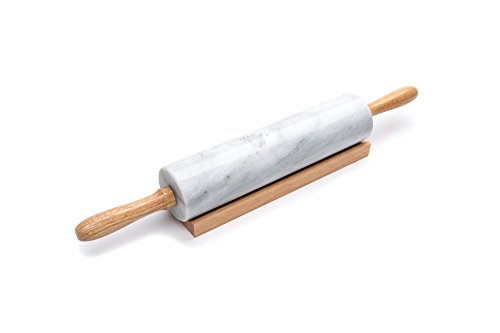
The Fox Run pin is sold as a pastry tool, but hand builders have borrowed marble pins for years, and the reasons are practical. Marble is heavy, so the barrel does much of the flattening work on stiff, freshly wedged clay that makes a light wooden pin skate and chatter. The polished stone surface releases clay cleanly, stays cool, and cannot warp or pick up moisture the way wood eventually can. The 10-inch barrel is shorter than the kit pins above, which makes this a pin for moderate slabs, tiles, and lids rather than the widest sheet work.
It comes with wooden handles and a wooden cradle that keeps the heavy barrel from rolling off the bench. The trade-offs are weight and care: marble is tiring over a long session of soft clay, it can chip if dropped on a concrete floor, and it should be washed and dried rather than left soaking. Treat it as the specialist pin for clay that fights back.
Specs:
- Barrel: polished marble, 10 in
- Handles: wood
- Stand: wooden cradle included
- Model: 4050COM
- Care: hand wash and dry; avoid dropping on hard floors
- Tier: premium
How to Choose
Start with pin length. The pin has to span your slab plus the guide sticks on both sides, so a pin in the 17-inch range handles most hand-building work, while shorter rods and barrels suit small sheets and detail work. If you regularly roll slabs wider than about 14 inches, a hand pin gets awkward and a tabletop slab roller becomes the better tool.
Next, decide how thickness will be controlled. Guide sticks are the most repeatable method for hand rolling, because the pin physically stops at the chosen thickness. Freehand rolling is fine for sculptural work where exact thickness does not matter, but it causes most warped plates and uneven box walls, so beginners should start with guides.
Material comes third. Wood is light, inexpensive, and kind to clay, but it should be kept dry and can roughen over time. Acrylic is the right choice for polymer clay and for anyone who wants a surface that wipes perfectly clean. Marble adds weight for stiff clay and never warps, at the cost of heft and fragility if dropped. Whatever you choose, roll on canvas or a linen cloth rather than a bare table, and roll in stages, turning the slab a quarter turn between passes.
Who Should Skip a Clay Rolling Pin
Skip the hand pin if you produce slabs in volume. A studio making dozens of identical plates or tiles every week will be better served by a tabletop slab roller machine, which produces a consistent sheet in a single pass. Also skip it if your work is mostly wheel throwing with only the occasional flattened base or lid; a pin will sit unused.
Polymer clay artists who need very thin, perfectly even sheets for canes and veneers should look at a dedicated conditioning machine instead, since a rod cannot match its uniformity at thin settings. And if your slabs run wider than your pin plus guides can span, no technique fixes the geometry; size up to a machine.
Frequently Asked Questions
What thickness should I roll clay slabs for hand building?
A quarter inch is the standard working thickness for most hand-built forms, because it is strong enough to join and shape but light enough to dry evenly. Thinner sheets around 0.12 to 0.2 inches suit tiles and decorative panels, while boxes and larger forms often use 0.39 inches or more. The guide stick sets in this guide cover that whole range.
Do I really need guide sticks, or can I roll freehand?
You can roll freehand, and experienced potters often do for sculptural work, but guides remove the most common beginner problem: a slab that is thick on one side and thin on the other. Uneven slabs warp, crack at joins, and dry at different rates. Guide sticks cost little and make thickness repeatable.
Should I roll clay on canvas or directly on the table?
Roll on canvas, linen, or another woven cloth. Clay rolled on a bare smooth table sticks, and peeling it up stretches and distorts the sheet. Fabric releases the slab, lets you lift or flip it by the cloth, and leaves a fine texture that helps joins grip.
How do I stop clay from sticking to a wooden rolling pin?
Start with clay that is firm rather than wet, and roll on cloth so the bottom never sticks. If the pin starts picking up clay, the surface is usually too damp; let the slab rest a few minutes, wipe the pin clean and dry, and continue with lighter passes. A light dusting of cornstarch helps with polymer clay on acrylic. Never soak a wooden pin; wipe it down and let it dry fully.
Final Verdict
For most potters, the Newtay 12-piece set is the easiest recommendation: a long wooden pin, five guide thicknesses, and a work cloth in one budget box. The AHIER set covers the same ground as a spare or classroom kit. Add the Sasylvia guides if you already own a pin, choose the AUGSUN acrylic rod for polymer clay, and reach for the Fox Run marble pin when stiff clay needs real weight.