
Key takeaways
- Compare five pottery molds for slip casting and hand building, including wood hump forms, a plaster slump mold, and a silicone bowl mold for clay.
- Top Pick: BENECREAT 4 Pcs Wood Pottery Molds
- Runner-up: Lampstop Cup Pottery Molds, Set of 3, Style A
- Also consider: GeryVtee 3-Pack Hexagon Pottery Molds
Pottery molds solve the hardest part of hand building: making the same shape twice. A good mold holds a slab to a fixed profile while the clay firms up, so a set of bowls, cups, or plates comes out matching instead of drifting in size and curve from piece to piece. Molds also open up forms that are slow to build freehand, such as wide shallow plates, faceted dishes, and straight-walled cups.
The catch is that the label covers very different tools. Plaster slip casting molds drink water out of liquid slip and build a hollow wall. Wood hump and slump forms support a rolled slab while it stiffens. Flexible silicone molds suit small press-molded work in polymer or air-dry clay. The five picks below cover each of those jobs, with the mold type stated plainly in the specs.
As an Amazon Associate, we earn from qualifying purchases.
Quick Answer
For most hand builders, the BENECREAT wood mold set is the most versatile starting point, with four handled slump forms for plates and bowls. Cup makers should look at the Lampstop beech wood cup molds, faceted work suits the GeryVtee hexagon set, the Mayco plaster mold covers classic slump and hump slab work, and the CALPALMY silicone mold handles small decorative clay bowls.
BENECREAT 4 Pcs Wood Pottery Molds
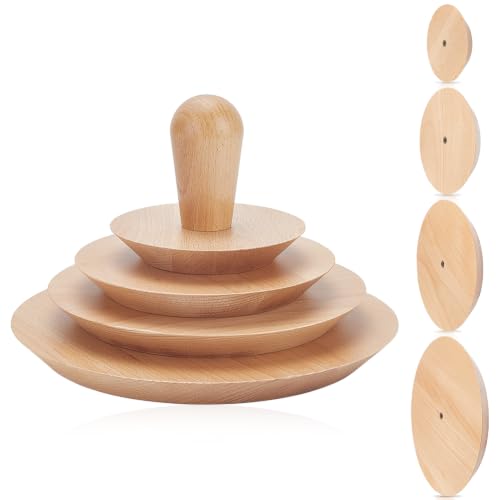
This four-piece wood set is the most general-purpose option in the roundup. Each form is a shallow dome with a handle on top, and a slab of clay is draped over or pressed against the form to take its curve. The four sizes step from small dishes up to a serving plate or bowl, covering most open forms a hand builder makes week to week. The handle gives a firm grip for lifting the form away once the clay has stiffened, and holds it steady while the slab is smoothed down with a rib.
Wood is a forgiving mold material for slab work. It does not pull moisture as aggressively as plaster, so the working window is longer and the clay is less likely to crack against the surface. The tradeoff is that wood forms need to dry out fully between sessions. For studios that mostly build plates, bowls, and platters from slabs, this set is the natural first purchase, and the graduated sizes make matching place settings straightforward to plan.
Specs
- Mold type: Wood slump and hump plate forming molds
- Pieces: 4 forms with handles
- Sizes: 4.7, 6.3, 7.8, and 9.5 inches
- Material: Wood
- Model number: WOOD-BC0001-34
- Best for: Plates, bowls, and shallow dishes built from slabs
Lampstop Cup Pottery Molds, Set of 3, Style A

Most mold sets concentrate on plates and bowls, leaving cup and mug bodies to be built freehand. This Lampstop set fills that gap with three wooden cup forms in graduated sizes. Each form is a beech wood cylinder-style mold around which clay is wrapped to shape a cup, mug body, or small vase. The three bottom diameters correspond to small, medium, and large mug capacities, and the forms support cylinders up to a stated maximum height, so taller tumblers are also within reach.
Beech is a dense, smooth hardwood, and the listing describes a sanded surface, which helps the clay release without tearing. Because the clay wraps the outside of the form, wall thickness is set by the slab, and the inside of the cup is finished by hand while the outside holds its profile. Potters who sell or gift mug sets will appreciate the repeatability most: three forms produce a consistent family of sizes, while handles, feet, and decoration can still vary piece by piece.
Specs
- Mold type: Wood hump forms for hand building cups and vases
- Pieces: 3 forms
- Bottom diameters: 3.1, 3.4, and 3.7 inches
- Approximate capacities: 11, 15, and 20 ounces
- Maximum cylinder height: 4.7 inches
- Material: Beech wood
- Model number: CupMold
- Best for: Cups, mug bodies, tumblers, and small vases
GeryVtee 3-Pack Hexagon Pottery Molds

Round forms dominate mold catalogs, so this hexagon set stands out for anyone who wants crisp, faceted tableware. The set includes three wooden hexagon forms in graduated sizes, each with a handle on top. A slab draped over a hexagon form picks up flat planes and defined edges that are difficult to cut and join accurately by hand, and the finished pieces carry a more geometric, modern character than round dishes.
Faceted forms demand a little more care during forming. Corners are the weak point of any slab piece, so the clay needs to be pressed firmly into each angle before the piece is left to stiffen. The reward is a set of matching hexagonal bowls and dishes that look deliberately designed rather than improvised. Like the other wood forms here, these should dry fully between uses, and the flat faces make them easy to store without rolling.
Specs
- Mold type: Wood hump and slump top forms, hexagonal
- Pieces: 3 forms with handles
- Sizes: 4.5, 5.5, and 6.5 inches
- Material: Wood
- Shape: Hexagonal
- Model number: GS-0095
- Best for: Faceted bowls, plates, and dishes with defined edges
Mayco Slump and Hump Mold, Square

Mayco is a long-established name in ceramics education, and this plaster mold is the traditional option in the group. The square form works two ways: clay pressed into the hollow side slumps into a square dish, while a slab draped over the raised side forms over a hump profile. That two-in-one geometry makes it a staple in classrooms and community studios, where one mold serves many different projects.
Plaster behaves differently from wood, and for many potters that is the point. It absorbs water from the slab on contact, firming the clay faster and releasing it cleanly once the piece has stiffened and shrunk slightly away from the surface. The square footprint suits trays, shallow serving dishes, and tile-like plates. Plaster is heavier and more fragile than wood, so it needs careful handling and dry storage, but treated well it serves for years of regular studio use.
Specs
- Mold type: Plaster slump and hump mold
- Form: Square, usable from both sides
- Dimensions: 7.5 by 7.5 by 2.5 inches
- Material: Plaster
- Model number: 405989
- Best for: Square dishes, trays, and classroom slab projects
CALPALMY Silicone Bowl Molds Kit for Clay
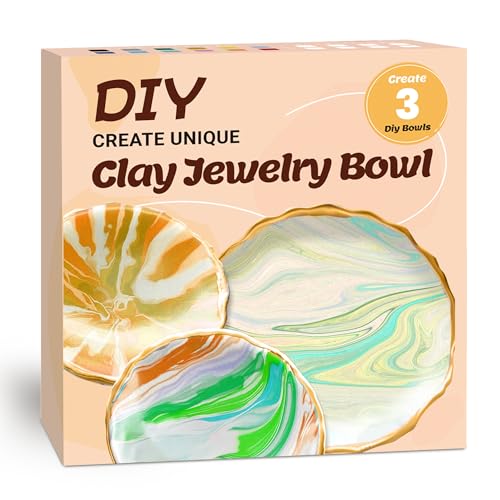
The CALPALMY kit takes a different route from the studio forms above. Its centerpiece is a flexible silicone bowl mold for shaping small clay bowls and trinket dishes, bundled with oven-bake polymer clay in multiple colors, a metallic paint, a detail brush, and shaping tools. Silicone flexes on release, so small bowls pop out without the careful timing that plaster and wood forms require, and the mold washes clean and stores flat.
The honest limit is scope. This is a craft-scale mold for decorative jewelry bowls, ring dishes, and small trays in polymer or similar clays, not a tool for kiln-fired stoneware tableware. Within that lane it is genuinely convenient: everything needed for a first session is in the box, and the flexible mold tolerates beginners pressing clay in too firmly or leaving it in too long.
Specs
- Mold type: Silicone press mold for small clay bowls
- Kit contents: Silicone bowl mold, oven-bake polymer clay in 20 colors, metallic paint, detail brush, and shaping tools
- Material: Silicone mold
- Model name: Clay Bowl Molds-Pink
- Best for: Trinket dishes, jewelry bowls, and small decorative trays
How to Choose
Start with the forming method, because it decides everything else. Slip casting needs an absorbent plaster mold with a cavity that liquid slip is poured into and drained from. Hand building with slabs needs a support form instead: a hump mold that clay drapes over, or a slump mold that clay settles into. The picks above are slab and press molds rather than slip casting cavities, so pair them with rolled slabs of even thickness.
Next, match the material to the workflow. Plaster firms clay quickly and releases cleanly, which suits production runs and classrooms, but it is heavy and chips if dropped. Wood is lighter, kinder to beginners, and slower to dry the clay, which leaves more time to smooth and adjust. Silicone is the flexible option for small decorative work, but it absorbs no moisture and belongs with polymer or air-dry clay projects.
Size and shape come after that. Buy for the finished pieces planned, remembering that clay shrinks as it dries and fires, so the fired piece ends up smaller than the mold. Graduated sets earn their shelf space because one purchase covers side dishes through serving pieces. Finally, consider care: plaster and wood molds need to dry fully between uses and should never be soaked, while silicone can simply be washed and put away.
Who Should Skip Pottery Molds
Wheel throwers who enjoy the variation of thrown work may find molds limiting, since every piece from the same form shares the same profile. Potters focused on one-off sculptural pieces will also get little from this category, because a mold only pays off when the same shape is made more than once. Anyone hoping to slip cast hollow ware such as bottles should look at multi-piece plaster casting molds instead, since the slab and press molds here cannot form enclosed shapes. If storage is tight, a single versatile size may be the wiser buy.
Frequently Asked Questions
What is the difference between a slump mold and a hump mold?
With a slump mold, the clay slab settles into a concave form, and the inside of the piece takes the shape of the mold surface. With a hump mold, the slab drapes over a convex form, and the outside of the piece follows the mold instead. Hump pieces must be removed earlier, because clay shrinks onto the form as it dries and can crack if left too long.
Can these molds be used for slip casting?
The molds in this roundup are designed for hand building with solid clay slabs, not for pouring liquid slip. Slip casting requires a plaster mold with an enclosed cavity and a pour opening, which is a different product type. The Mayco mold shares the absorbent material used in casting molds, but its open slump and hump geometry is made for slabs.
How long should clay stay on a mold before removal?
Clay should stay on a mold until it reaches a firm leather-hard stage, when it holds its shape but is still slightly damp. On a hump mold, removal should happen on the earlier side of that window because the clay shrinks onto the form. On a slump mold, the clay shrinks away from the surface, so it can safely stay longer.
How should plaster and wood molds be cleaned and stored?
Brush dry clay off with a soft, dry brush and let the mold air out until completely dry before the next use. Neither plaster nor wood molds should be washed or soaked, since absorbed water weakens plaster and can warp wood. Store molds in a dry place, protected from knocks, and keep plaster away from wet clay areas to avoid contamination.
Final Verdict
The right pottery mold depends on the pieces on the making list. The BENECREAT set is the best all-round choice for slab-built plates and bowls, the Lampstop forms bring the same repeatability to cups and small vases, and the GeryVtee hexagons add a faceted option that freehand building rarely matches. The Mayco plaster square remains the traditional classroom pick, while the CALPALMY silicone kit covers small decorative bowls. Choose the mold type first, then the size range, and a small collection of forms will quietly standardize the most repeated shapes in the studio.









