
Key takeaways
- Compare the best pottery banding wheels for decorating, trimming, and hand building, with cast iron picks in small and large sizes for every studio bench.
- Top Pick: Nidec-Shimpo BW-25HC Banding Wheel (Premium)
- Runner-up: HighFree Large 12 Inch Sculpting Wheel (Mid-Range)
- Also consider: YaeTek 12 Inch Sculpting Pottery Wheel (Budget)
A banding wheel is the simplest tool in the pottery studio: a heavy disc on a bearing, spun by hand, with no motor and nothing to plug in. That simplicity is exactly why potters rely on it. Trimming a leather-hard foot, painting an even band of slip, carving a pattern, or slowly turning a hand-built form while you add a coil all call for rotation you control with a fingertip, at speeds a powered wheel cannot match for delicacy. A good banding wheel coasts smoothly, stays put under tool pressure, and keeps spinning long after you let go.
The five wheels below are all manual banding wheels sold on Amazon, and they split into clear tiers. The premium pick is a cast iron studio standard from Nidec-Shimpo. The mid-range pairs a wide 12 inch work surface with all-metal construction. The budget picks cover a full-size cast iron wheel for less money and a compact 7 inch wheel for small work. Every model here uses ball bearings and a metal wheel head, because those two details decide how a banding wheel feels after a year of wet clay.
As an Amazon Associate, we earn from qualifying purchases.
Quick Answer
For most potters, a 12 inch cast iron banding wheel is the sweet spot: heavy enough to spin smoothly under trimming pressure, and wide enough for plates and bowls. The Nidec-Shimpo BW-25HC is the premium pick, the US Art Supply 12 inch wheel is the mid-range workhorse, and the Creative Hobbies BW-18M suits small pieces on a tight budget.
1. Nidec-Shimpo BW-25HC Banding Wheel (Premium)

Shimpo banding wheels are the reference point in community studios and school ceramics rooms, and the BW-25HC is the tall pedestal model in the line. The wheel head measures 9-7/8 inches across and sits 7-1/2 inches high, which raises your work toward eye level for slip trailing, banding, and detailed carving while you sit or stand at the bench. The one-piece cast iron body gives it real flywheel weight, so a single push keeps it turning through a long, unbroken brush stroke.
Shimpo builds these wheels with a double bearing design and a rust-resistant blue finish over the cast iron. The head has concentric lines for quick centering, and the whole unit is heavy enough at 19 pounds that it does not creep across the table when you lean a trimming tool into a foot ring. If you decorate production work or teach with the wheel all day, this is the buy-once option in the roundup.
Specs:
– Wheel head diameter: 9-7/8 inches
– Height: 7-1/2 inches
– Weight: 19 pounds
– Construction: solid cast iron, one-piece design
– Bearings: double ball bearing design
– Finish: rust-resistant blue paint
– Surface: concentric centering lines
2. US Art Supply Large 12 Inch Sculpting Wheel (Mid-Range)
The US Art Supply 12 inch sculpting wheel, model ST-210, is the most popular mid-range banding wheel on Amazon, and the formula is straightforward: a full 12 inch all-metal wheel head on heavy-duty ball bearings, with concentric circles machined into the surface for centering. The wide head swallows dinner plates, chargers, and large bowls that would overhang a smaller wheel, and the maker rates it for loads up to 50 pounds, which covers all but the largest sculptural work.
Because the head is removable from its base on this style of wheel, cleanup is easy: lift the top off, sponge away clay, and keep water out of the bearing. It works as a decorating turntable for glazing and painting as well as a trimming station, which makes it a sensible single purchase for a home studio that does a bit of everything.
Specs:
– Wheel head diameter: 12 inches
– Model number: ST-210
– Construction: all-metal, heavy duty
– Bearings: ball bearings
– Surface: concentric centering circles
– Rated load: up to 50 pounds
– Height: not stated by the maker in the listing summary
3. HighFree Large 12 Inch Sculpting Wheel (Mid-Range)

The HighFree 12 inch sculpting wheel follows the same proven pattern as the US Art Supply model, with an iron top and base joined by a heavy-duty ball bearing. It stands 4.53 inches tall on a 7.28 inch base, weighs 8 pounds, and carries a 50 pound load rating. The top carries concentric circles for centering, and a non-skid rubber base keeps it planted while you work.
At 8 pounds it is noticeably easier to carry between benches or pack for a workshop than the cast iron studio wheels, while still being heavy enough to trim on without the base skating. For potters who want the full 12 inch surface but move their setup around, this is the practical mid-range choice.
Specs:
– Wheel head diameter: 12 inches
– Height: 4.53 inches
– Base diameter: 7.28 inches
– Weight: 8 pounds
– Material: iron with rubber non-skid base
– Bearings: heavy-duty ball bearing
– Rated load: 50 pounds
– Part number: HFR-005055
4. YaeTek 12 Inch Sculpting Pottery Wheel (Budget)

The YaeTek 12 inch banding wheel is the budget way to get a full-size cast iron head. The top is heavy cast iron joined to the base with ball bearings, finished with concentric circles for centering and a non-skid rubber boot under the base. At 12 pounds it has more flywheel weight than the lighter aluminum-style wheels, so it coasts longer and feels steadier under a trimming tool.
This is the same general casting sold under several brand names, and the trade-offs are the usual ones for the tier: the finish is less refined than the Shimpo, and you should wipe it dry after wet work rather than leaving damp clay sitting on it. As a first banding wheel or a second wheel for a glazing corner, it does the core job well.
Specs:
– Wheel head diameter: 12 inches
– Construction: heavy cast iron
– Bearings: ball bearings
– Base: non-skid rubber boot
– Weight: 12 pounds
– Surface: concentric centering circles
– Height: not stated by the maker
5. Creative Hobbies BW-18M Professional Sculpting Wheel (Budget)
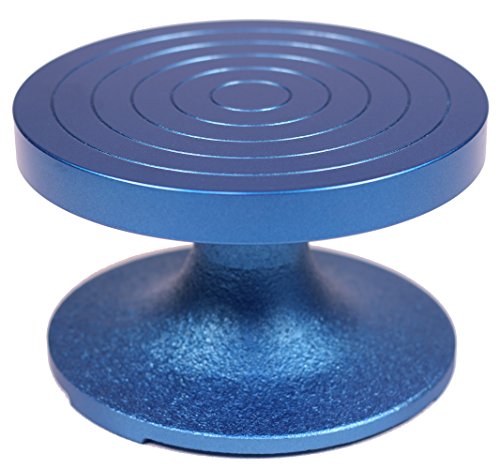
The BW-18M from Creative Hobbies is the compact pick: a 7 inch solid cast iron wheel, 4.24 inches high, finished in the same style of rust-resistant blue enamel as the big studio wheels. It uses sealed ball bearings and a weighted top, so despite the small diameter it spins smoothly and keeps its momentum while you paint or carve.
Seven inches is too small for dinner plates, but it is the right size for mugs, cups, small bowls, and figurines, and it takes up almost no bench space. Students, miniature sculptors, and potters who mainly decorate small ware will find it easier to live with than a full-size wheel, and the cast iron build means it should outlast plastic turntables by years.
Specs:
– Wheel head diameter: 7 inches
– Height: 4.24 inches
– Construction: solid cast iron
– Bearings: sealed ball bearings
– Top: weighted top for longer spin
– Finish: blue rust-resistant enamel
How to Choose a Pottery Banding Wheel
Start with diameter. A 12 inch head is the versatile default: it supports plates, platters, and wide bowls, and gives you room to rest a hand while you paint. A 7 to 10 inch head suits cups, mugs, and small sculpture, and stores in a fraction of the space. Buy for the largest piece you realistically decorate, not the largest piece you throw, because oversize work can overhang slightly while undersize work on a huge wheel just gets awkward.
Height is the second decision. Low wheels around 2-1/4 to 4-1/2 inches tall keep work at bench level, which most potters prefer for trimming because you can brace your elbows. Tall pedestal wheels around 7-1/2 inches raise the piece for banding, slip trailing, and painting while seated, and they are easier on your back during long decorating sessions. Some potters own one of each; if you only buy one, match the height to the task you do most.
Weight and material decide how the wheel feels. Cast iron wheels are heavy, and that weight is a feature: it creates flywheel momentum for long, even spins and keeps the base from shifting under tool pressure. Lighter metal wheels are easier to move and fine for painting and glazing, but they stop sooner and can wobble under a heavy trimming cut. Whatever you choose, look for sealed or shielded ball bearings, since clay dust and water are what kill cheap turntables, and never soak a banding wheel to clean it. Sponge the head, dry it, and keep water away from the bearing.
Finally, check the surface. Concentric centering circles etched or printed on the head make it much faster to center a piece for banding, and a non-skid base or rubber boot saves you from chasing the wheel around the bench. A removable head is a small convenience that makes cleanup noticeably easier.
Who Should Skip a Banding Wheel
Skip the banding wheel if you are shopping for a wheel to throw on. A banding wheel has no motor, so it cannot center a ball of clay or sustain throwing speeds; you need an electric potter’s wheel for that, and no banding wheel is a substitute. Also skip it if your only rotating task is occasional cake decorating or displaying finished pieces, because a light plastic craft turntable does that job for less money and less bench weight. And if you only ever trim on your electric wheel’s head, a banding wheel adds a tool you will rarely reach for; it earns its space when you decorate, carve, paint, or hand-build away from the throwing wheel.
Frequently Asked Questions
What is the difference between a banding wheel and a pottery wheel?
A pottery wheel is motor-driven and built for throwing: centering clay and pulling walls at sustained speed. A banding wheel is a manual turntable with no motor. You spin it by hand for trimming, decorating, banding, carving, and hand building, where slow, fingertip-controlled rotation matters more than power.
What size banding wheel should a beginner buy?
A 12 inch cast iron wheel is the safest first purchase because it fits almost everything from mugs to dinner plates and its weight makes it forgiving to use. Choose a 7 inch wheel only if you work small or have very limited bench space.
Can you trim pots on a banding wheel?
Yes. Trimming leather-hard ware is one of the main uses. The wheel will not spin as fast as an electric wheel, but for foot rings and surface refinement the slower, controlled rotation is often an advantage, and heavy cast iron wheels hold a steady spin under the tool.
How do you clean and maintain a banding wheel?
Sponge clay off the head with as little water as possible, dry the surface, and never submerge the wheel or hose it down, because water in the bearing causes rust and rough spinning. Store cast iron wheels dry, and wipe the head before putting them away after wet work.
Final Verdict
Buy the Nidec-Shimpo BW-25HC if you want the studio standard and expect to decorate or trim for years; its cast iron weight, double bearings, and pedestal height are worth the premium. Buy the US Art Supply 12 inch wheel if you want the proven mid-range all-rounder, or the HighFree 12 inch if you need the same size in a lighter, easier-to-move package. The YaeTek is the budget full-size pick, and the Creative Hobbies BW-18M is the right call for small ware and tight benches. Match the diameter to your work, favor cast iron weight, and any of these five will serve a studio well.










