
Key takeaways
- Compare the best terracotta clay for pottery and garden pots, from air-dry blocks to kiln-ready bodies, and pick the right clay for your next project.
- Top Pick: AMACO Air Dry Clay, Terra Cotta, 25 lb
- Runner-up: DAS Air-Hardening Modeling Clay, Terra Cotta, 2.2 lb
- Also consider: Sculpey Air-Dry Terra Cotta, 2.2 lb
Terracotta clay is the warm red-brown material behind classic garden pots, rustic planters, hand-built bowls, and sculpted figures. Its iron-rich color needs little decoration, so a plain pot already looks finished. The hard part is choosing among the blocks on the shelf, because some dry in the air while others need a kiln.
As an Amazon Associate, we earn from qualifying purchases.
Quick Answer
For most people, the AMACO Air Dry Clay in Terra Cotta is the best terracotta clay to buy first, because the 25-pound block covers many projects, needs no kiln, and dries hard enough to paint and seal. Sculptors who want a finer, smoother surface should look at DAS, while families and classrooms will get more value from the Crayola 5-pound bucket.
How to Choose Terracotta Clay
Begin with the firing question, because it decides everything else. Air-dry and self-hardening clays harden at room temperature and never enter a kiln, which makes them the right choice for home crafters, teachers, and anyone without kiln access. Kiln-fired terracotta needs a kiln that reaches cone 06 to cone 04. If you do not own a kiln or cannot use a community kiln, buy an air-dry clay.
Next, match the block size to the work. A 25-pound block suits a studio, a classroom, or a batch of garden pots. A 2-pound block suits sculpture, ornaments, and trial pieces. A 5-pound bucket sits in the middle and works well for a family that crafts on weekends.
Drying time decides how much patience a project needs. Most air-dry terracotta clays need one to three days to harden, and thick pieces need longer, because the center dries last. Dry pieces slowly, away from direct heat, turn them so every side gets air, and hollow out bulky sculptures so the walls stay even. Air-dry terracotta is not waterproof on its own, so garden pots need a sealer inside and out, and pieces meant to hold water need a liner.
1. AMACO Air Dry Clay, Terra Cotta, 25 lb

The AMACO Air Dry Clay in Terra Cotta is the workhorse pick in this guide. The 25-pound block is the largest here, and it suits a home studio, a classroom, or anyone who plans to make a run of planters and bowls rather than a single ornament. The clay arrives moist and ready to use, and it hardens in the air without a kiln or an oven.
It feels smooth and plastic, with enough body to hold a coil wall or a slab-built box without slumping, which makes it a good choice for garden pots. Finished pieces dry hard and durable, and they take paint well, so a plain terracotta pot can stay natural or gain a painted band or a sealed finish for outdoor use. Keep unused clay sealed in a plastic bag or wrapped in a damp cloth, since the block dries out if it is left open.
Specs
| Spec | Detail |
|---|---|
| Brand | AMACO |
| Model | AMA46319S |
| Weight | 25 lb |
| Type | Air-dry clay |
| Color | Terra Cotta |
| Kiln needed | No |
| ASIN | B0009RNUKQ |
2. DAS Air-Hardening Modeling Clay, Terra Cotta, 2.2 lb

DAS is the pick for sculptors and detail work. The 2.2-pound block is small, but the clay is fine-grained and smooth, and it holds crisp edges on faces, animals, flowers, and small decorative pieces. It is a mineral-based clay made in Italy, and it has been a standard craft clay for decades.
The clay dries in the air in about 12 to 24 hours for thin pieces, and thicker pieces need longer. Once dry it feels hard and solid, and it can be sanded, carved, and painted. That matters for sculpture, because a piece that sands cleanly lets you fix a rough edge after drying instead of living with it. The warm terracotta color looks good unpainted, and water-based paints sit well on the dried surface.
Specs
| Spec | Detail |
|---|---|
| Brand | DAS |
| Model | F387600 |
| Weight | 2.2 lb |
| Type | Air-hardening modeling clay |
| Color | Terra Cotta |
| Kiln needed | No |
| ASIN | B001GAP4Y0 |
3. Sculpey Air-Dry Terra Cotta, 2.2 lb

Sculpey Air-Dry in Terra Cotta is the most approachable clay in this guide for a maker who wants a smooth, easy material for modeling, handprints, ornaments, and holiday projects. The 2.2-pound bar is non-toxic, soft out of the package, and simple to knead, which makes it a good choice for a first clay purchase and for mixed-age groups.
The clay air-dries in one to three days, and the dried piece is lightweight yet durable. It can be sanded, carved, and painted with water-based acrylics, so a plain ornament can become a finished gift with a coat of paint and a sealer. The fine texture keeps fingerprints and tool marks soft, which suits smooth sculpted forms. It suits jewelry dishes, small bowls, sculpted animals, and keepsake handprints.
Specs
| Spec | Detail |
|---|---|
| Brand | Sculpey |
| Model | AD2222T |
| Weight | 2.2 lb |
| Type | Air-dry clay |
| Color | Terra Cotta |
| Kiln needed | No |
| ASIN | B007WDPK26 |
4. Crayola Air Dry Clay, Terra Cotta, 5 lb Bucket
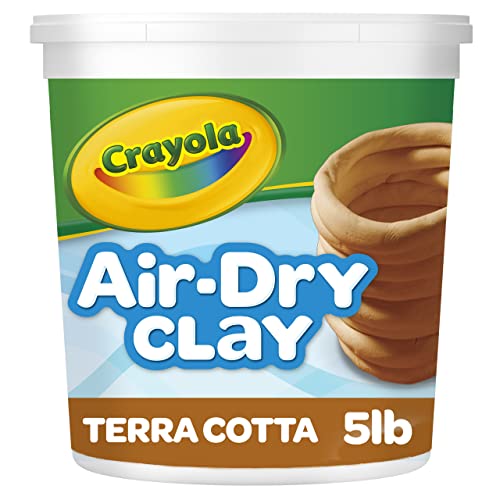
The Crayola Air Dry Clay bucket is the family and classroom pick. The 5-pound supply comes in a reusable bucket with a snap-fit lid, which solves the most common problem with air-dry clay, keeping the unused portion soft between sessions. The clay is made for ages three and up, and it is non-toxic, soft, and easy to mold.
For pottery and garden pots, the bucket size hits a useful middle ground. Five pounds is enough for several small planters, a set of pinch pots, or a classroom table of sculptors, without the storage and lifting of a 25-pound block. The clay air-dries into a durable, paintable form, and it works for hand building, sculpture, and simple shaping by hand.
Specs
| Spec | Detail |
|---|---|
| Brand | Crayola |
| Model | 57-2004 |
| Weight | 5 lb |
| Type | Air-dry clay |
| Color | Terra Cotta |
| Kiln needed | No |
| ASIN | B01MZBUJGI |
5. ReArt Natural Air-Dry Clay, Terracotta

ReArt is the bulk pick for makers who want a large supply of terracotta air-dry clay without buying a kiln-fired body. The listing describes a 20-pound supply of natural kaolin-based clay in terracotta, aimed at sculpting, hand modeling, and wheel throwing. It air-dries without baking or firing, and the maker describes it as smoother, finer, and less sticky than traditional clay.
That large supply suits a run of garden pots or a series of planters, where several pounds go into each piece and a small block would run out halfway through the batch. Finished work dries solid and durable, and it can be painted once fully dry.
One detail needs a check before ordering. The listing title names a 20-pound supply, while the listing weight field records 10 pounds per unit, so confirm the pack size and the number of units in the box on the product page before you buy. The clay itself is a genuine terracotta air-dry clay, and the pack-size question is about quantity, not about the material.
Specs
| Spec | Detail |
|---|---|
| Brand | ReArt |
| Model | Clay-001 |
| Listed quantity | 20 lb |
| Type | Air-dry clay |
| Color | Terracotta |
| Kiln needed | No |
| ASIN | B0C5XFF1HZ |
Terracotta, Earthenware, and Stoneware: What Is Different
Terracotta is a kind of earthenware, and that causes confusion. Earthenware is the broad family of low-fire, porous clays, and terracotta is the red-brown member of that family, colored by iron in the clay. So every terracotta clay is an earthenware clay, but not every earthenware clay is terracotta, because earthenware also comes in white, buff, and gray. This guide only picks clays that name terracotta as their color or fired color.
Stoneware is a different family. It fires hotter, vitrifies more fully, and comes out denser and less porous than earthenware. A stoneware pot can survive weather and daily use with less sealing, but it needs a hotter kiln and it does not have the warm red color of terracotta unless a glaze or a red stoneware body supplies it. If you want the classic red garden pot look, terracotta is the direct choice.
Who Should Skip These
Skip air-dry terracotta if you need a pot that holds water outdoors through winter. Air-dried clay stays porous, and a wet piece can crack when the water inside it freezes. A fired, glazed stoneware pot, or a fired terracotta pot brought indoors for winter, is safer.
Skip these picks if you want food-safe tableware. Air-dry clays are not food safe once painted or sealed with craft finishes, and they should not hold food or drink. For mugs, bowls, and plates, use a kiln-fired clay with a food-safe glaze.
Skip the small 2.2-pound blocks if you plan a batch of large garden pots. Two pounds covers one modest planter at most, and you will run out mid-batch.
FAQ
Can terracotta clay go in a kiln?
Air-dry terracotta clays in this guide should not go in a kiln, because they are made to harden in the air and they are not kiln-fired clay bodies. Kiln-fired terracotta is a different product, a low-fire earthenware body sold as moist clay for potters, and it fires to a rich red at cone 06 to cone 04. Never fire an air-dry clay.
Is terracotta clay waterproof?
No, terracotta is porous, whether it is air-dried or kiln-fired. An unglazed terracotta pot lets water pass slowly through its walls, which helps soil dry evenly but also means the pot will not hold water on its own. Seal the inside and outside for outdoor use, and use a liner or a saucer under any pot that sits on wood or fabric.
How long does air-dry terracotta clay take to dry?
Thin pieces often feel firm within a day, and most air-dry terracotta needs one to three days to harden through. Thick pieces need longer, because the center dries last. Dry pieces slowly at room temperature, away from direct heat, and turn them so every side gets air.
Can I paint terracotta clay?
Yes, dried terracotta clay takes paint well, and water-based acrylics give the cleanest result. Let the piece dry fully first, since paint over damp clay can peel or trap moisture. A clear sealer over the paint protects the finish outdoors and keeps the color from fading in sun and rain.
Final Verdict
The best terracotta clay for most people is the AMACO Air Dry Clay in Terra Cotta, because the 25-pound block covers pottery, garden pots, and classroom projects, needs no kiln, and dries into a hard, paintable piece. Buy DAS when detail matters most, Sculpey for the smoothest small project, Crayola for a family or classroom bucket, and ReArt for a large supply. Whichever you choose, dry pieces slowly and seal them for outdoor use.









