
Key takeaways
- Compare the best ceramic salt cellars and salt pigs, from open French salt pigs to lidded countertop cellars with spoons, with capacities and care specs.
Seasoning by the pinch is how most experienced cooks actually salt food, and a ceramic salt cellar is the tool built for exactly that habit. Unlike a shaker, which meters out whatever its holes allow, an open cellar or salt pig lets you take a pinch, a spoonful, or a full grab for a pasta pot, all from the same vessel sitting next to the stove. Ceramic suits the job for practical reasons that go beyond looks. A glazed stoneware or porcelain body does not react with salt, does not pick up odors from the counter, and carries enough weight to stay put when you reach in with wet fingers. Some designs leave the interior unglazed so moisture is drawn away from the salt surface, while lidded designs trade that openness for protection against steam and splashes. The five cellars below cover both families, from a classic French open pig to small lidded cellars with their own spoons.
As an Amazon Associate, we earn from qualifying purchases.
Quick Answer
The best ceramic salt cellar for most kitchens is the Emile Henry Salt Pig, whose unglazed interior keeps salt loose and whose wide mouth suits pinching at the stove. The Le Creuset Salt Crock is the alternative in the same open style, while the Mora set, the OTOTO Lily, and the Blake ‘n’ Grey cellar add lids and spoons for cooks who want the salt covered between uses.
How to Choose
Start with the opening style, because it decides how the cellar behaves every day. An open salt pig has a wide side mouth and no lid. It is the fastest format for pinching while a pan is on the heat, and the sloped hood over the opening shields the salt from most splashes. A lidded cellar closes completely, which matters in steamy kitchens where open salt can clump, but it adds a step every time you season. Neither format is airtight in the way a sealed canister is, so in very humid homes the lidded designs have a real edge.
Capacity is the second decision. Small cellars around six to eight ounces suit finishing salt at the table or a single cook who seasons lightly. Ten to twelve ounces is the working range for a stove-side cellar that also fills a pasta pot without constant refills. Anything larger starts to behave like bulk storage and belongs in a cupboard rather than beside the burners.
Interior finish is the detail most buyers miss. A fully glazed interior wipes clean in seconds and shrugs off stains. An unglazed interior, used on the classic French pigs, absorbs a little surface moisture and helps keep the top layer of salt dry and loose instead of crusting over. Finally, check the extras. An included spoon keeps fingers out of the salt during serving, and dishwasher-safe bodies simplify cleanup, though wooden spoons and lids usually want hand washing.
The 5 Best Ceramic Salt Cellars
1. Emile Henry Salt Pig

Emile Henry has made ceramic cookware in France since 1850, and its salt pig is the reference design for the open style. The body is the maker’s HR Ceramic, a high-resistance material built for kitchen knocks, and the wide side opening is shaped so a hand can reach in at an angle while the hood above keeps the salt shaded from stovetop spray. The feature that sets it apart is the unglazed interior: with no glaze layer, the inner wall draws moisture away from the salt surface, which helps stop a crust forming on top of the pile. Capacity is 0.35 liters, enough for everyday cooking salt with room to spare, and the Clay color is a warm neutral that sits comfortably next to most cookware. There is no lid and no spoon; it is a purist’s tool. Cooks in humid kitchens may prefer a lidded pick below, but for active daily seasoning this is the format the others imitate.
Specs
- Material: HR Ceramic (high-resistance ceramic)
- Capacity: 0.35 liters
- Interior: Unglazed, to limit crusting
- Model: EH020201
- Color: Clay
- Origin: Made in France
- Tier: Premium
2. Le Creuset Stoneware Salt Crock
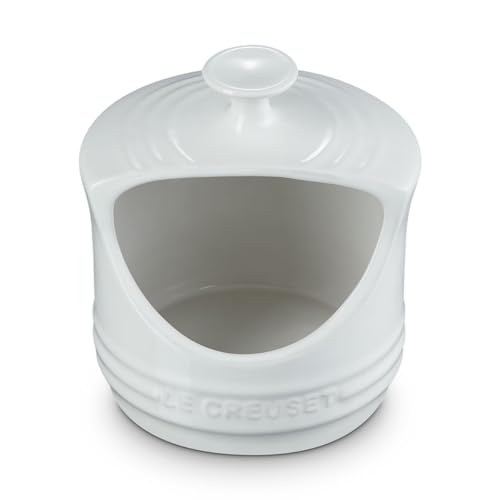
Le Creuset’s salt crock applies the brand’s dense stoneware to the same open-pig idea. The large side opening gives the same one-handed pinch access as the Emile Henry, and the ten-ounce capacity lands in the middle of the stove-side range. The stoneware body is the draw here: it is heavy for its size, so the crock does not skate across the counter when you dig in, and the enamel-style glaze resists stains and odors from nearby cooking. Le Creuset rates its stoneware line for the dishwasher, microwave, oven, and broiler, which makes an occasional deep clean simple. The white finish is the listing color for this model. Compared with the Emile Henry, the interior is glazed rather than raw, so it wipes cleaner but leans on the hood shape alone to keep the salt surface dry. For cooks who want the open format with the easiest cleanup of the two, this is the one.
Specs
- Material: Stoneware
- Capacity: 10 ounces
- Model: PG1020T-1016
- Color: White
- Design: Open side-mouth crock
- Care: Dishwasher, microwave, oven, and broiler safe
- Tier: Premium
3. Mora Ceramic Salt and Pepper Cellar Set

Mora’s set answers a different question: what if the cellar needs to hold pepper as well? The listing is a matched pair of porcelain cellars, one charcoal and one white, each with its own lid and a wooden spoon that stores with the set. Porcelain is the lightest and smoothest of the ceramic bodies in this roundup, with a fine, non-porous surface that rinses clean and does not hold seasoning odors between refills. The lids make this the strongest pick for steamy kitchens and for cooks who season at the table as much as at the stove, since the salt stays covered between meals. The listing gives a ten-ounce capacity figure and describes the glaze as lead free. Two smaller covered vessels will not match an open pig for raw speed while a pan is searing, and the wooden spoons need hand washing, but as a countertop pair that keeps salt and pepper dressed and ready, this set covers the job in one purchase.
Specs
- Material: Porcelain
- Set: 2 cellars (Charcoal and White)
- Capacity: 10 fluid ounces
- Included: Lids and wooden spoons
- Feature: Lead free glaze, per the listing
- Maker: Mora Ceramics
- Tier: Mid-range
4. OTOTO Lily Salt Cellar

The OTOTO Lily is the personality pick of the group: a green ceramic cellar shaped around a lily pad theme, complete with a lid and a spoon that rests as part of the design. Under the novelty is a sensible small cellar. Six ounces is a finishing-salt capacity, right for flaky salt kept at the table or beside a plating station rather than the main cooking supply. The lid keeps the contents covered, the spoon keeps fingers out, and the ceramic body has the heft to stay planted despite the small footprint. OTOTO builds its kitchen line around playful forms, so the frog-and-lily styling will either charm you or rule it out immediately, and that is a fair way to choose. Functionally it does everything the plain lidded cellars do, in a smaller size, with a look that earns its counter space in kitchens that do not take themselves too seriously.
Specs
- Material: Ceramic
- Capacity: 6 ounces
- Model: OT1271
- Color: Green
- Included: Lid and spoon
- Design: Lily pad theme
- Tier: Mid-range
5. Blake ‘n’ Grey Handcrafted Speckled Ceramic Salt Cellar

The Blake ‘n’ Grey cellar is the handcrafted entry in this roundup, a speckled gray ceramic salt keeper with a vintage, antique-leaning finish that varies slightly from piece to piece. It is a three-piece set of base, lid, and wooden spoon, with a capacity of 7.5 ounces that suits a stove-side pinch salt or a table salt for two to four diners. The footprint is compact at 3.75 inches wide and 2.25 inches high, so it tucks into the narrow strip of counter between stove and backsplash where cellars actually live. The ceramic body is dishwasher safe and microwaveable per the listing, while the wooden spoon should be hand washed to protect the wood. One caution from the listing data: recent crawls of this product page showed no featured offer, so check current availability and the selling variant before ordering. If it is in stock, it is the budget-friendly way to get the lidded, spooned format with a handmade look none of the factory-glazed picks offer.
Specs
- Material: Ceramic
- Capacity: 7.5 ounces
- Pieces: 3 (base, lid, and wooden spoon)
- Dimensions: 3.75 inches wide by 2.25 inches high
- Care: Cellar dishwasher safe; spoon hand wash
- Style: Speckled gray, antique
- Tier: Budget
Who Should Skip
Skip the salt cellar format entirely if you season almost exclusively with a grinder or a shaker and never cook by the pinch; a cellar rewards a habit you may not have. Skip open pigs if your kitchen runs steamy and the salt will sit untouched for weeks, because even an unglazed interior has limits and a lidded or sealed container will keep salt looser. Skip the small six-ounce cellars if you regularly salt large pots of water, since you will refill them constantly. And skip ceramic altogether if the cellar will live within elbow range of cast iron pans being swung around daily; stoneware and porcelain are tough for their class, but a hard knock on a thin rim can still chip them, and a bamboo or metal salt box survives that environment better.
Frequently Asked Questions
Is a salt pig better than a lidded salt cellar?
Neither is better in absolute terms. A salt pig is faster for pinching while you cook and its hood keeps most splashes off the salt, while a lidded cellar protects the salt from steam and dust between uses. Choose the pig for an active stove-side station and the lidded cellar for humid kitchens or table service.
Why do some salt pigs have an unglazed interior?
An unglazed ceramic interior absorbs a small amount of moisture from the surface of the salt, which helps prevent the top layer from crusting and clumping. It is a traditional feature of French salt pigs. The trade-off is that the raw interior does not wipe clean as quickly as a glazed one.
How much salt should a countertop cellar hold?
For most home cooks, eight to twelve ounces is the practical range: enough for daily seasoning plus the occasional pot of pasta water, without the salt sitting around long enough to stale or clump. Smaller cellars around six ounces work well for finishing salts that are used a spoonful at a time.
Can ceramic salt cellars go in the dishwasher?
Most glazed stoneware and porcelain cellars in this roundup are listed as dishwasher safe, including the Le Creuset crock and the Blake ‘n’ Grey cellar body. Wooden spoons and wooden lids are the exception and should be hand washed and dried so the wood does not split.
Final Verdict
For a single do-everything pick, the Emile Henry Salt Pig remains the benchmark: an unglazed interior that keeps salt loose, a hood that shields the pile, and a capacity sized for real cooking. The Le Creuset crock matches it in the open format with easier cleaning. If your salt needs a lid, the Mora pair covers salt and pepper together, the OTOTO Lily brings a small covered cellar with charm, and the Blake ‘n’ Grey offers the handmade look for less, subject to stock. Match the format to your kitchen’s humidity and seasoning habit.
Product and ASIN Reference
| Product | ASIN |
|---|---|
| Emile Henry Salt Pig | B00T4AOI3M |
| Le Creuset Stoneware Salt Crock, 10 oz, White | B000P7Q2A0 |
| Mora Ceramic Salt and Pepper Cellar Set, Black and White | B0CRSJ8B6T |
| OTOTO Lily Salt Cellar, Green | B0DC6HDJML |
| Blake ‘n’ Grey Handcrafted Speckled Ceramic Salt Cellar | B0CH47JDCP |









